
Understanding the Real Cost of a Riviera Bathroom Renovation
For a standard 4 to 6 m² bathroom in an older Nice building — think Liberation, Cimiez or the Vieux Nice periphery — a full gut renovation with new waterproofing, tiling, plumbing and fixtures runs between €9,000 and €22,000 in 2026. The spread depends heavily on whether you are touching the plumbing stack (colonne montante), moving the shower or WC, and whether the syndic requires you to bring shared risers up to code while you are at it. In Cannes and Antibes, expect labor costs roughly 10 to 15% higher than Nice proper, and in Monaco you are realistically looking at €25,000 to €45,000 for the same square meterage once you factor in the principality's stricter site-access rules, mandatory insured artisans, and the premium everyone charges simply for working there.
Break the budget down by trade and it becomes easier to sanity-check quotes: plumbing rough-in typically runs €2,500 to €4,500, electrical (including new lighting circuits and the mandatory RCD for wet zones) another €1,500 to €2,800, waterproofing and tiling labor €3,000 to €6,000 depending on tile size and pattern complexity, and fixtures plus fittings anywhere from €2,000 for entry-level to €10,000+ if you are specifying Italian stone vanities or a walk-in shower with a frameless glass screen. Always ask for a devis that separates fourniture (materials) from main-d'oeuvre (labor) line by line — vague lump-sum quotes are where surprises hide, and in my experience the artisans most reluctant to itemize are the ones padding the margin on materials you could source cheaper yourself.
Waterproofing First: Why Humidity and Salt Air Change the Rules
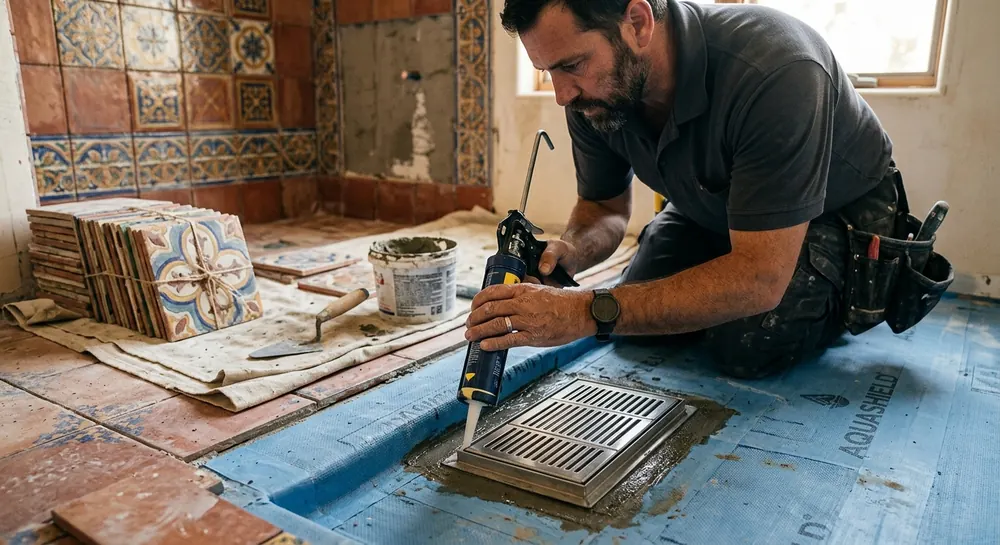
This is the section most expats underestimate, and it is the single biggest driver of failure five years down the line. French building standard DTU 60.11 governs plumbing installations, but the waterproofing membrane under your tiles — the natte d'étanchéité, usually a liquid-applied SEL (Système d'Étanchéité Liquide) or a fleece membrane like Schlüter-DITRA — is what actually keeps water out of your slab and your downstairs neighbor's ceiling. On the coast, salt-laden humid air infiltrates through micro-cracks in old renders far more aggressively than inland moisture, so I specify a minimum 1.2mm SEL coating on walls up to shower-head height and full floor coverage, not just the wet zone corners some artisans try to get away with. Budget €35 to €55 per m² just for this membrane work, and never let anyone convince you a coat of paint-on waterproofing under tile adhesive is sufficient in a coastal flat — I have opened up three Cannes bathrooms in the past two years where exactly that shortcut rotted the joists.
Ventilation matters just as much as membranes. Many Belle Époque and Haussmannian buildings in central Nice were never designed with mechanical extraction, and older VMC (ventilation mécanique contrôlée) ducts are frequently undersized or blocked with decades of salt-corroded dust. A new VMC extraction point dedicated to the bathroom costs €400 to €900 installed and pays for itself by preventing the black mold blooms that plague ground and first-floor apartments near the Promenade des Anglais. If your building's shared ventilation shaft is shared with a kitchen or another bathroom, get the syndic's permission in writing before tapping into it — I have seen renovations held up six weeks over exactly this kind of undocumented connection discovered mid-project.
Fixture Choices That Survive Salt Air and Humidity
Standard chrome-plated brass fittings, the kind sold in most French DIY chains, start pitting and blackening within 18 to 30 months in a flat within a kilometer of the sea — I have replaced taps in Antibes and Beaulieu-sur-Mer that looked a decade older than their actual age. For coastal work, specify 316L marine-grade stainless steel or solid brass with a PVD (physical vapor deposition) finish rather than standard electroplating; brands like Grohe, Hansgrohe and Villeroy & Boch offer coastal-rated ranges, and while a PVD mixer costs €280 to €550 versus €90 to €150 for a standard chrome one, the lifespan difference easily justifies it over a ten-year horizon. The same logic applies to shower drains and hinges — cheap zinc-alloy hinges on glass screens are a recurring failure point I see in Menton and Cap d'Ail apartments within two summers.
For surfaces, large-format porcelain tiles (60x120cm or bigger) with minimal grout lines are your friend in a salt-air environment because they give mold far less surface area to colonize, and they run €40 to €90 per m² for good quality without needing natural stone's sealing maintenance. If you do want the look of stone, porcelain slabs replicating travertine or marble now look convincing enough that most guests never notice, and you avoid the annual resealing that actual limestone requires against salt-air staining. On brassware finishes, matte black and brushed nickel are trending across Riviera renovations right now, but confirm with your supplier that the specific finish is rated for high-chloride environments — some matte black coatings are cosmetic only and will streak within a year of shower use combined with sea-air humidity.
Permits, Syndic Approval, and Working with French Artisans as an Expat
Most cosmetic bathroom renovations — new tiles, fixtures, a repositioned shower within the existing footprint — do not require a mairie permit in Nice, Cannes or Antibes. However, the moment you move the WC to a different stack location, alter a load-bearing wall, or change the building's exterior appearance (rare in a bathroom, but relevant if you are adding an extractor vent through the façade), you need a déclaration préalable de travaux, which typically takes six to eight weeks to process and costs nothing in fees but plenty in delay if you have not planned for it. Separately, and this catches almost every expat off guard, any work touching the shared plumbing colonne montante or common ventilation duct requires syndic de copropriété approval, sometimes voted at a general assembly that only happens once or twice a year — so check your building's assemblée générale calendar before you fall in love with a floor plan that requires moving pipes.
On the artisan side, always confirm your plumber or tiler carries assurance décennale, the mandatory ten-year insurance covering structural and waterproofing defects — ask to see the actual certificate, not just take their word for it, because I have encountered at least two cases in Nice where the insurance had lapsed mid-project. Get every devis in writing with a fixed price or clearly capped hourly rate, a start date, an estimated completion date, and a payment schedule that never front-loads more than 30% before work begins. If your French is limited, hiring a local project manager or architecte d'intérieur to handle devis comparison and site coordination typically costs 8 to 12% of total project value but often saves more than that in avoided miscommunication, especially around technical waterproofing specifications that do not translate cleanly between English and French trade vocabulary.
Common Pitfalls and How to Avoid Costly Surprises
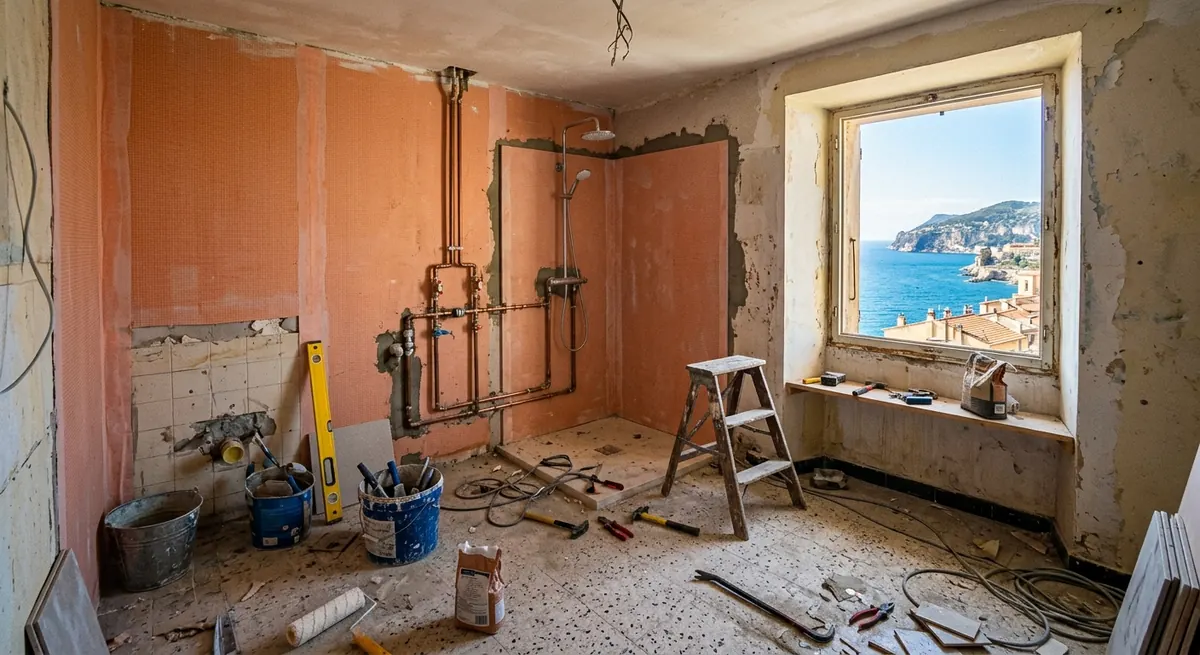
The most expensive surprise I see in Riviera bathroom jobs is discovering, once tiles come off, that the existing waterproofing and plumbing behind a 1960s or 70s installation is in far worse condition than anyone assumed — cast iron stacks corroded from decades of salt-air condensation, or a completely undocumented rerouting from a previous renovation. Build a contingency of at least 12 to 15% into your budget specifically for this, and insist your contract includes a clause for how additional discovered work will be quoted and approved before proceeding, rather than being billed after the fact. Timing is the second major pitfall: trying to schedule renovation work in Monaco or Cannes during April through June, when the Grand Prix and festival season create intense demand for skilled trades, routinely adds two to four weeks of delay and sometimes a modest premium on labor — booking artisans in the January to March off-season gets you both better availability and slightly sharper pricing.
Finally, watch for mismatched expectations around finishing details that seem minor but compound quickly: grout color that looks fine on a sample chip but reads differently across a full wall, shower niches sized without checking your actual shampoo bottles, or a heated towel rail specified on the wrong electrical circuit that trips your whole apartment's RCD. Walk the site weekly during active work, keep a written log of any verbal changes agreed on-site, and never do final payment until you have run water in every fixture, checked drainage flow rate, and confirmed there is zero movement or hollow-sounding tile when you tap around the shower base — that last check alone has caught failed waterproofing on at least three jobs I have inspected in Villefranche-sur-Mer and Nice's Riquier district before the client made a costly final payment.
Frequently asked questions
Expect roughly €1,800 to €3,500 per m² for a full renovation including waterproofing, plumbing, tiling and mid-range fixtures, with Monaco and central Cannes running noticeably higher due to labor rates and stricter site-access requirements.
Cosmetic work rarely needs a mairie permit, but moving the WC or shower to a new plumbing stack location, or altering shared ventilation, requires syndic de copropriété approval and sometimes a déclaration préalable de travaux, so check early to avoid delays.
Airborne salt chloride accelerates oxidation on standard chrome-plated brass, causing pitting and blackening within two to three years in flats close to the sea — specifying 316L stainless steel or PVD-coated fixtures significantly extends their lifespan.