
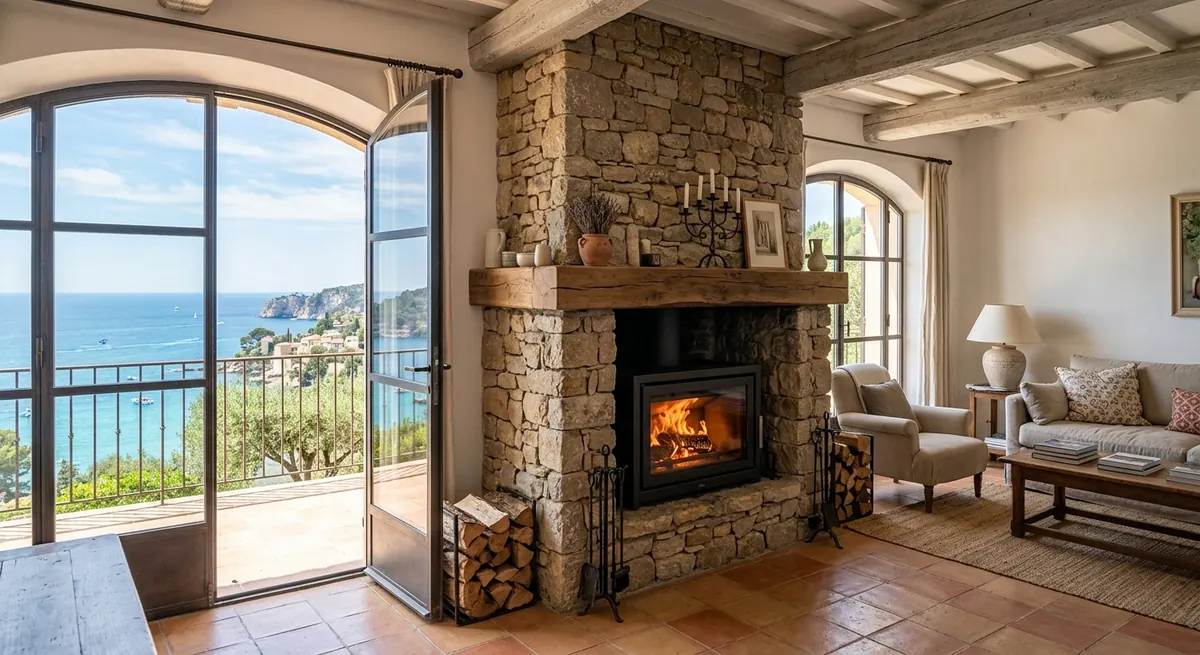
Why So Many Nice Villa Chimneys Are Quietly Dangerous
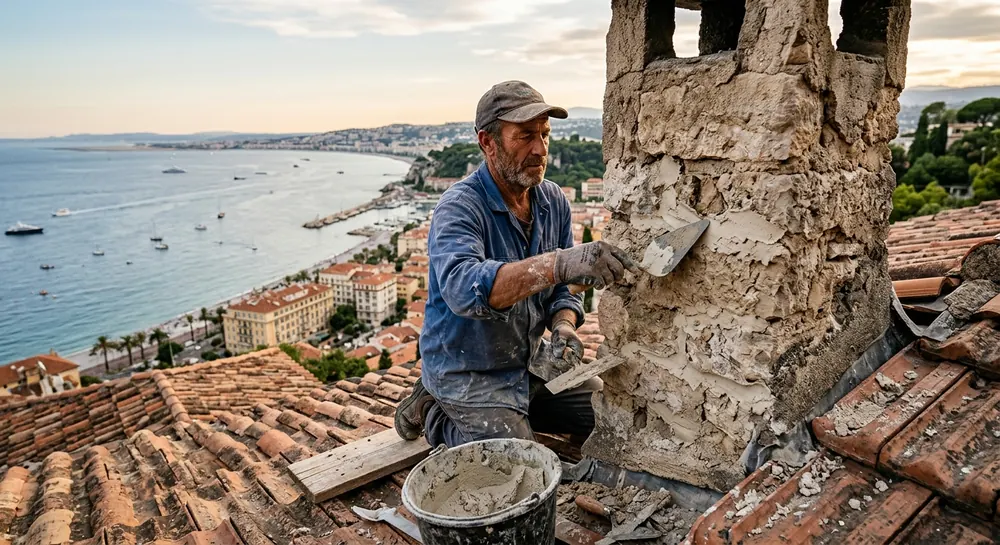
I have crawled into more chimney breasts in Cimiez and Le Vieux Nice than I care to count, and the pattern repeats itself almost every time. Villas built between 1890 and 1935 were often fitted with flues made of soft local stone or lime-rendered rubble, sometimes just 8 to 10 centimetres thick, with zero insulation and a bore that narrows unevenly as it climbs. Add sixty or eighty years of soot, a few generations of amateur repairs with the wrong mortar, and you get a flue that looks charming from the salon but fails a smoke test within minutes. Cracks you cannot see from below let heat and carbon monoxide migrate into wall cavities, which is exactly how house fires start in these old stone structures.
The other recurring issue is scale. Original Niçois fireplaces were built for wood-fed radiant heat in rooms with 3.2 to 3.6 metre ceilings, which means the firebox is often oversized relative to any modern insert, and the flue collar rarely matches current standard diameters of 153, 180 or 200mm. Before anyone talks about inserts, stoves, or beautiful glass fronts, the flue itself needs a proper diagnostic. In my experience on properties from Cannes to Antibes, roughly one in three older chimneys I inspect needs either a full tubage (flexible or rigid liner insertion) or partial rebuilding before it can legally support any heating appliance. Skipping this step is the single most common reason insert installations fail inspection or, worse, cause damage six months later.
What French Building Codes Actually Require
The governing text is DTU 24.1, which covers flue construction and chimney systems, alongside the norm NF EN 15287-1 for retrofitting appliances into existing masonry chimneys. In practical terms for a Nice villa, this means your renovated flue must have a continuous, smoke-tight liner rated for the appliance you install, adequate clearance from combustible materials (generally 8cm minimum from timber joists, more if insulation class is unknown), and a termination above the roofline that respects both fire safety distances and, if you are in a protected sector like Vieux Nice or parts of Cimiez, the Architecte des Bâtiments de France's aesthetic requirements for chimney pots and caps. Insurance companies in the Alpes-Maritimes have become notably stricter since regional wildfire risk assessments tightened; several of my clients have had claims initially challenged because their chimney lacked a valid ramonage certificate from the past twelve months.
On the practical side, any wood or pellet appliance installed today needs a professional sweep certificate (ramonage), typically twice yearly if used as a primary heat source, and the installer should hand you a certificate of conformity referencing the specific DTU. If you are applying for MaPrimeRénov or the éco-PTZ zero-interest loan to offset insert costs, the installer must hold RGE (Reconnu Garant de l'Environnement) certification, full stop, no exceptions accepted by the ANAH. I have seen homeowners lose eligibility for a 2000€ subsidy simply because they hired a talented but non-RGE artisan for the tubage work. Always ask to see the RGE certificate number before signing a devis, and check it against the France Rénov registry yourself; it takes five minutes and has saved several of my clients real money.
Choosing the Right Insert for a Stone Fireplace
Once the flue is sound, the fireplace opening itself dictates your options more than any product catalogue does. A typical Niçois hearth opening runs anywhere from 70x60cm to a generous 110x90cm in the grander villas along Boulevard Victor Hugo or up in Fabron, and cast-iron or steel inserts need roughly 3 to 5cm of clearance on all sides plus a rock wool or vermiculite fill between the appliance and the old stone to manage heat transfer safely. Wood-burning inserts with a nominal output of 8 to 12kW suit most 25 to 45 square metre living rooms typical of these homes, and a quality unit from brands like Supra, Deville, or Jotul runs between 2200€ and 4800€ for the appliance alone, before installation. Pellet inserts cost more upfront, typically 3800€ to 7000€, but offer programmable heat and far less manual tending, which matters if the villa is a secondary residence occupied only on weekends or during the summer season.
Installation labour, including the tubage, insulation, hearth adaptation, and finishing trim, generally adds 2500€ to 5500€ depending on flue height and access difficulty. Villas with steep tiled roofs common around Mont Boron or Le Suquet in Cannes often push toward the higher end because scaffolding or a nacelle rental adds 600€ to 1200€ just for safe roof access. One detail owners frequently overlook: if the original stone mantel or carved surround has heritage value, and many do in Belle Époque properties, you will want a mason experienced in matching lime-based mortars rather than modern cement, which cracks against old stone within a couple of winters. I always budget an extra 400€ to 900€ for this finishing work and consider it non-negotiable if you care about the room's character.
The Renovation Process, Step by Step
A realistic timeline starts with a chimney diagnostic and smoke test, which a specialised ramoneur-fumiste can perform in half a day for 150€ to 300€. This report tells you definitively whether you need a full tubage, a partial repair, or simply a cleaning and recertification. Next comes the devis phase; get at least two quotes, because I have seen identical jobs priced anywhere from 4500€ to 9000€ depending on whether the artisan is based centrally in Nice, where overhead is higher, or working out of Grasse or Le Broc, where rates tend to run 15 to 20 percent lower for comparable craftsmanship. Once you have selected an installer, expect the actual on-site work, tubage, insert fitting, and hearth finishing, to take three to six working days for a straightforward job, extending to two weeks if masonry repairs to the surround or firebox are needed.
If your villa sits in a secteur sauvegardé or near a classified monument, which covers a fair stretch of old Nice and parts of Antibes' Vieux Port, you will need a déclaration préalable for any visible change to the chimney's exterior termination, even a simple cap replacement. The mairie's urbanisme office typically processes this within one month, though I always tell clients to submit before summer, since July and August applications queue up behind holiday rental compliance checks. Once installation is complete, insist on receiving the certificate of conformity, the RGE invoice breakdown for tax purposes, and photographic documentation of the liner before it disappears behind the new hearth finish. That documentation matters enormously at resale; buyers' notaires on the Riviera increasingly ask for proof of chimney conformity, and its absence has delayed at least two sales I worked on personally.
Budget Reality and Getting the Numbers Right
Pulling it all together, a complete fireplace-to-insert renovation on a typical Nice villa lands between 6000€ and 13000€ all-in: diagnostic, tubage, insert, installation labour, and finishing masonry. Simpler jobs with an already sound flue can come in under 5000€, while grand double-height fireplaces in properties around Cap de Nice or the hills above Villefranche, with complex roof access and heritage surrounds to preserve, can reach 15000€ or more. Factor in that MaPrimeRénov currently offers meaningful support for wood and pellet insert installations through RGE-certified professionals, often 800€ to 2500€ depending on household income bracket and appliance efficiency rating, which materially changes the equation for many owners.
The return on this investment goes beyond aesthetics. A properly converted insert typically cuts wood consumption by 40 to 60 percent compared to an open hearth, because so much heat previously vanished straight up an unlined flue rather than radiating into the room. For a villa owner heating a 150 square metre home partly with wood, that translates into real seasonal savings, often 300€ to 600€ per winter compared to running electric heating for the same rooms. My honest advice after fifteen years of these projects: never choose an installer purely on lowest price, ask for references from at least two completed jobs in the Alpes-Maritimes specifically, since flue conditions here differ meaningfully from installations in colder, more standardised regions inland, and always get the diagnostic done before falling in love with any particular insert model.
Frequently asked questions
Realistically budget 6000€ to 13000€ for a full conversion including flue diagnostic, tubage, the insert itself, installation labour, and finishing masonry, though simple jobs with an already sound flue can come in closer to 5000€.
Yes, if your villa sits in a protected sector such as Vieux Nice or near a classified monument, any visible change to the chimney termination requires a déclaration préalable filed with the mairie's urbanisme office, typically processed within a month.
In most cases yes, provided a mason familiar with lime-based mortars adapts the surround; budget an extra 400€ to 900€ for this specialised finishing work rather than letting a general contractor use modern cement against old stone.