
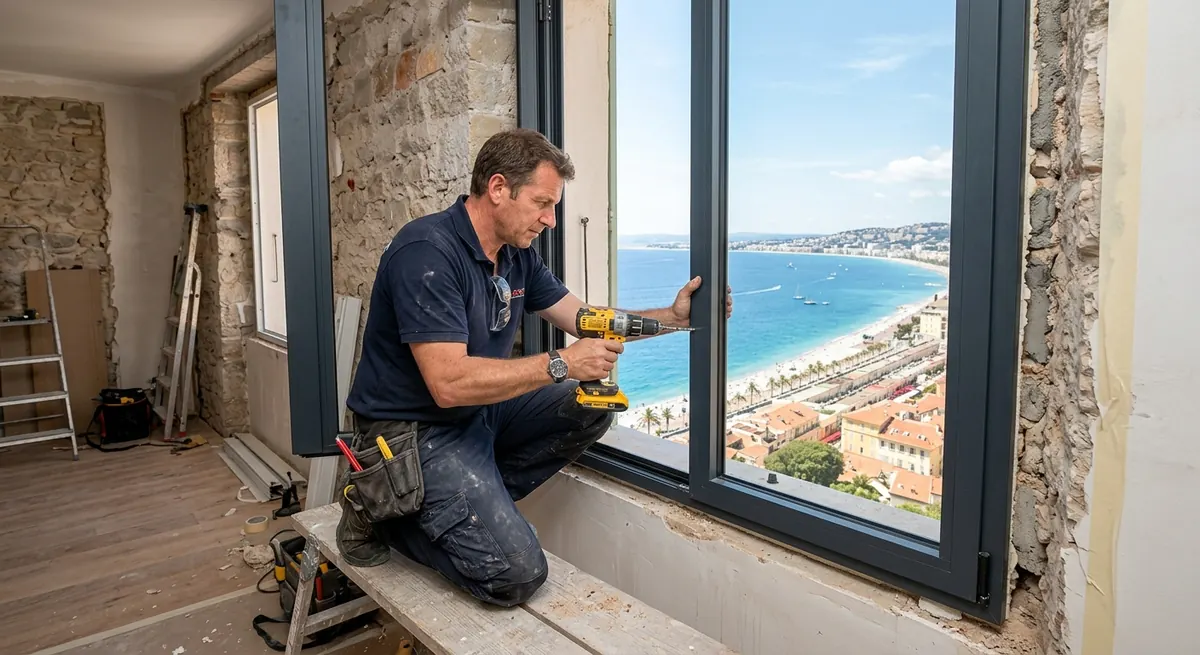
Why the Riviera Is Brutally Hard on Old Windows
I have crawled through enough attic conversions in Cimiez and ground-floor cellars in Vieux Nice to know that a window here ages differently than one in Lyon or Lille. Salt-laden air rolling off the Baie des Anges eats into steel fixings and untreated aluminum within a decade, and the constant swing between summer humidity and dry mistral gusts warps old timber frames until they no longer close flush. Add the fact that half the building stock in the Carré d'Or and along Boulevard Gambetta dates from the 1900s to the 1930s, with single-pane glass set in thin wooden casements, and you get apartments that lose heat fast in January and turn into ovens by June.
Noise is the other half of the story, and it is often what actually pushes owners to act. A flat facing the Promenade des Anglais can register 70-75 decibels from traffic and scooters at street level, while villas on the Basse Corniche near Villefranche-sur-Mer pick up wave noise, wind, and the odd yacht engine at 2am. Original windows built a century ago simply were not engineered for either problem. Once you start pricing insulation upgrades, replacing tired single glazing with a properly specified double-glazed unit is consistently the highest-return renovation move for coastal Nice property, ahead of insulation in walls or roofs.
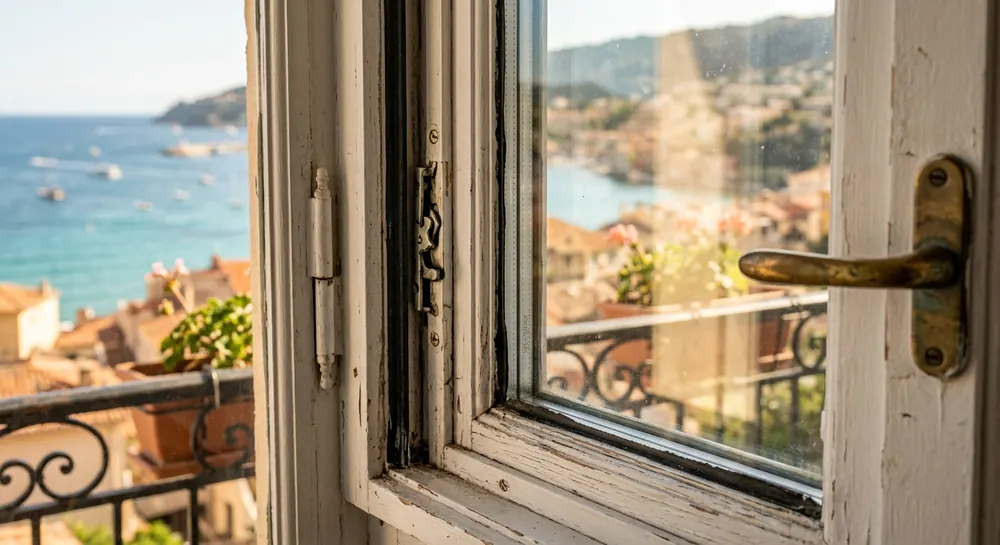
Choosing a Frame That Survives Salt Spray
Frame material matters more here than almost anywhere else in France, because raw aluminum and untreated steel corrode visibly within five to eight years on a front-line property in Cap d'Antibes or Cap Ferrat. For genuine sea-facing exposure, ask your carpenter specifically for marine-grade anodized or thermolacquered aluminum, ideally with a RAL coating rated for C4 or C5 corrosion class, plus stainless steel (A4/316) hinges and hardware rather than the standard A2 grade sold in most showrounds. This upgrade typically adds 8 to 12 percent to the frame cost but genuinely doubles the service life in a splash zone, and any installer who cannot tell you the corrosion class of their coating on request is not the right person for a seafront job.
PVC remains the budget-friendly option and performs decently on set-back properties in Fabron or Saint-Isidore that are not directly exposed to spray, running roughly 450 to 700 euros per square meter installed. Aluminum with proper marine treatment sits at 600 to 950 euros per square meter, and it is what I specify for most Croisette-facing and Boulevard Carnot apartments because it holds tight lines and slim profiles that suit period facades. Wood-aluminum composite, with oak or chestnut inside and a protective aluminum shell outside, costs 900 to 1,400 euros per square meter but is the only choice that satisfies both thermal performance and the aesthetic rules the Architectes des Bâtiments de France impose on protected buildings in Vieux Nice and around the Château area.
Getting the Glazing Spec Right for Noise and Heat
Not all double glazing is equal, and this is where I see the most money wasted. A generic 4-16-4 unit with standard argon fill will cut drafts and improve U-values, but it does very little for traffic noise because both panes vibrate at similar frequencies. For anything facing Promenade des Anglais, Avenue Jean Médecin, or a busy corniche road, specify asymmetric acoustic glazing, something like 10/16/4 with one laminated acoustic pane, which pushes sound reduction from around 28 dB up to 38-42 dB. That difference is the gap between hearing every passing bus and barely noticing the street below.
For villas up on Mont Boron or in Cap Ferrat where solar gain through large bay windows is the bigger issue, low-emissivity coatings and solar control glass matter more than acoustic lamination. A low-E coated double unit with argon fill typically delivers a U-value around 1.1 W/m²K versus 5.8 for old single glazing, which on a 100 m² apartment can mean 250 to 400 euros a year in heating and cooling savings depending on orientation and how many hours the air conditioning runs in August. Expect acoustic or solar upgrades to add roughly 100 to 150 euros per square meter over standard double glazing, money that most owners recover within six to nine years through comfort and energy bills alone.
The Installation Process and What It Really Costs
Before any glass gets ordered, two administrative steps trip up more Nice owners than the actual carpentry does. If you are in a copropriété, which covers the vast majority of Nice apartment buildings, you need a vote or at minimum written authorization from the syndic before changing window appearance, frame color, or material, especially on street-facing facades in Cimiez or the Liberation district. If your building sits within a protected perimeter, common across Vieux Nice, the Port area, and parts of Cours Saleya, the Architecte des Bâtiments de France will dictate frame color, glazing bar pattern, and sometimes even limit you to timber, which is why getting a compliant wood-aluminum quote early saves months of back and forth.
On the tools-down side, a straightforward apartment job, replacing 8 to 10 windows in an existing opening without touching the surrounding masonry, generally runs 8,000 to 18,000 euros all in, taking a two-person team about four to six working days. A seafront villa with 18 to 25 openings, larger bay formats, and scaffolding access for upper floors climbs to 25,000 to 60,000 euros, and timelines stretch to two or three weeks once you factor in custom sizing and the six to ten week lead time most French manufacturers quote for made-to-measure aluminum or wood-aluminum units. Always ask for a tuilage detail on old stone openings, meaning how the new frame interfaces with existing rendering, because a sloppy seal here is the single most common cause of water infiltration complaints I see on Riviera renovation sites two winters after installation.
Keeping Salt-Resistant Windows Performing Long Term
Even a well-specified marine-grade window needs maintenance that inland properties can skip. Rinse frames and especially hinges and handles with fresh water every four to six weeks if you are within 200 meters of the sea, since salt crystallizes in crevices and accelerates pitting corrosion faster than most owners expect, particularly on balconies in Beaulieu-sur-Mer and along the Antibes ramparts. Check rubber gaskets and seals annually, because UV exposure at Riviera intensity degrades standard EPDM seals in about seven to eight years versus twelve inland, and a cracked seal quietly undoes all the acoustic and thermal gains you paid for.
Manufacturer warranties on marine-treated aluminum typically run 10 years on the frame and coating, sometimes extended to 15 for premium ranges, but that coverage is usually voided if you use abrasive cleaners or pressure washers directly on the coating, so stick to mild soap and a soft cloth. On the financial side, real estate agents active around Nice's Musiciens district and along the Cannes seafront confirm that certified double glazing with a documented DPE improvement can add measurable value at resale, often cited in listings alongside sea view and parking as a genuine selling point rather than a footnote. Given that heating and cooling costs on older Riviera properties can run 30 to 40 percent higher through leaky single glazing, most owners recoup the investment through a mix of energy savings and resale premium within eight to twelve years.
Frequently asked questions
For a standard two or three bedroom apartment with 8 to 10 windows, expect 8,000 to 18,000 euros installed, depending on frame material, glazing spec, and whether acoustic lamination is added for street-facing rooms.
Yes in most cases. Copropriété approval from your syndic is required for any change to shared facade appearance, and buildings in protected zones like Vieux Nice or around Cours Saleya also need sign-off from the Architecte des Bâtiments de France on frame color and material.
Marine-grade anodized or thermolacquered aluminum with A4 stainless steel hardware performs best directly on the coastline, while wood-aluminum composite is the preferred choice when heritage rules require a timber appearance.