
What ABF Actually Protects in Your Building, and Why It Matters More Than You Think
If you own a flat in the Carré d'Or, around Avenue Jean Médecin, or in one of the grand facades lining the Promenade des Anglais, you are almost certainly inside a secteur sauvegardé or within 500 meters of a classified monument, which means the Architecte des Bâtiments de France has a say before you touch a single window. Since Nice's Belle Époque hotel-villas and winter-resort architecture were inscribed on the UNESCO World Heritage list, ABF scrutiny on facades has tightened rather than relaxed, even for interior courtyards that nobody but your neighbors ever sees. I have watched owners assume that a courtyard-facing window is exempt, only to get a rejection letter three months later because the building's registration covers the whole volume, not just the street elevation.
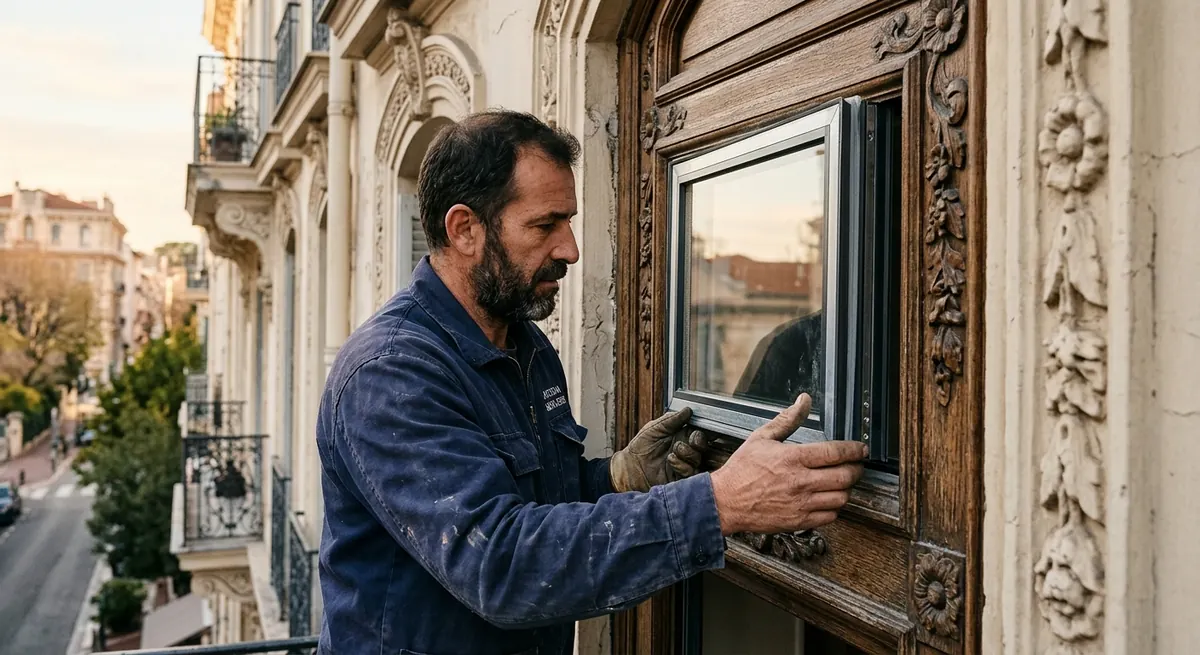
What ABF cares about is almost never the double glazing itself. It is the window's silhouette: the petit-bois divisions, the proportions of the casement, the color of the frame, and often the exact profile depth that matches the 1890s-1910s joinery next door. A PVC frame, however well-insulated, gets refused on sight in these zones because its thickness and sheen read wrong against limestone or painted render. Wood frames, sometimes wood-aluminum composites with a wood face visible from outside, are the default accepted material. Budget real time for this step: a dossier submitted through your mairie's urbanisme service typically takes six to twelve weeks for a simple déclaration préalable, longer if the ABF requests modified drawings or a sample frame section.
The Three Technical Routes That Actually Pass ABF Review
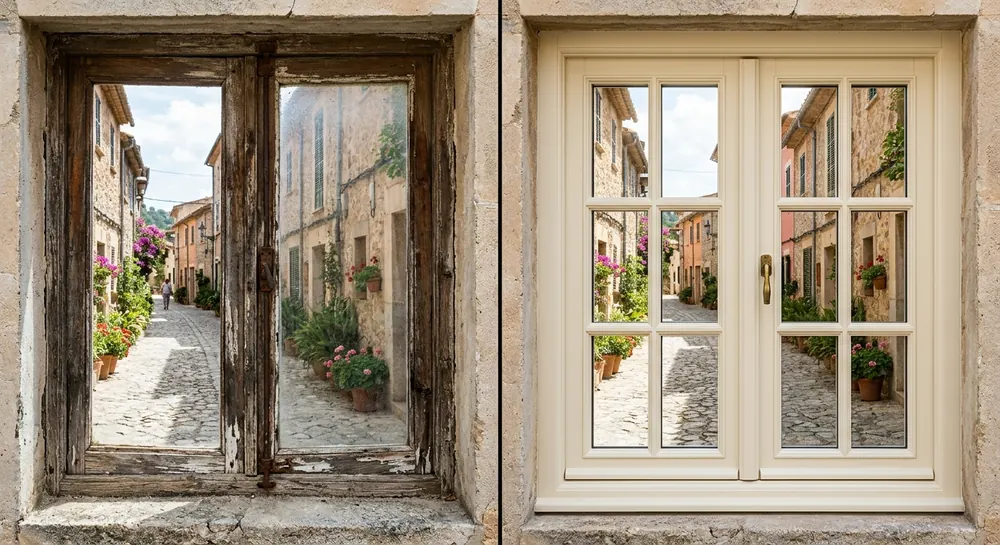
The most common accepted solution in Nice is a bespoke wood-framed double-glazed window built to replicate the original profile, usually in oak or meranti, with slim 16-20mm double glazing units that keep the overall sash thickness close to the historic single pane. Artisans around Nice and Antibes who specialize in this work, several based in the Saint-Roch and Las Planas industrial zones, charge between 1,800 and 3,200 euros per window fully installed, depending on size, the complexity of moldings, and whether you need matching shutters or espagnolette hardware reproduced. A typical three-bedroom Belle Époque apartment with seven to nine windows lands somewhere between 14,000 and 26,000 euros for a full replacement campaign, which is why most owners phase the work over two or three years.
A second route, often underused, is secondary glazing: adding a slim interior or exterior second pane behind the existing single-glazed window rather than replacing it outright. This is frequently the fastest path to ABF approval because the original window stays untouched, which ABF reviewers appreciate, and it costs considerably less, typically 600 to 1,200 euros per opening depending on size and whether you choose a fixed or openable secondary leaf. The acoustic gain is often better than people expect, sometimes rivaling full replacement, because the air gap between the two panes does more work than the glass thickness itself. The third route, reserved for courtyard or rear facades not visible from public streets, is a conventional double-glazed wood window without strict profile matching; here ABF typically only checks color and general proportions, and costs drop to 1,400-2,200 euros per window since the joinery can be more standardized.
Real Budgets, Financing, and the Copropriété Factor
Before pricing out your own windows, check your copropriété's règlement, because in most Haussmannian-style buildings along Rue de France or in Cimiez, window replacement on street-facing facades is classified as a modification of common parts requiring a vote at the assemblée générale, even though you pay for your own windows. I have seen individual projects delayed a full year simply because the syndic hadn't scheduled the item, so raise it at the next AG regardless of your own timeline. Some buildings have already negotiated a blanket ABF-approved window model for the whole facade, which saves every owner the individual approval process and is worth asking your syndic about directly before you commission custom drawings.
On financing, MaPrimeRénov exists but applies awkwardly to protected buildings: the standard grid assumes PVC or standard aluminum options that ABF won't authorize here, so your realistic subsidy often comes from the lower, wood-specific bracket, typically 40 to 65 euros per window depending on income bracket and performance class, rather than the headline amounts advertised nationally. The Métropole Nice Côte d'Azur occasionally runs supplementary heritage-renovation grants for facades within the protected perimeter, worth checking directly with the Maison de l'Habitat before committing, since eligibility criteria shift year to year. Realistically, budget for covering 70 to 85 percent of costs out of pocket, and sequence the work by exposure: start with north and street-facing rooms that lose the most heat and transmit the most traffic noise before tackling interior courtyard openings.
Noise Is Often the Real Reason to Upgrade, Not Just Heating Bills
Energy savings from window replacement alone in a well-built Belle Époque apartment are often modest, maybe 8 to 12 percent on heating costs, because these buildings typically have thick stone walls that already perform reasonably well thermally; the bigger, more immediately felt gain is acoustic. Apartments facing Promenade des Anglais or the tram line on Jean Médecin routinely measure street noise above 70 decibels at window level during the day, and a well-fitted double-glazed wood window with asymmetric glass thicknesses, say 6mm and 10mm panes rather than matched 4-4, can cut perceived noise by 25 to 35 decibels, which is the difference between constant background roar and being able to sleep with the window shut in July.
When noise is the priority, specify acoustic lamination, not just double glazing: a 44.2 acoustic laminated pane on the exterior leaf costs maybe 150-250 euros more per window than standard double glazing but performs noticeably better against low-frequency traffic and scooter noise, which standard glass struggles to block. Also insist your installer address the frame-to-wall junction, not just the glass, because a poorly sealed reveal around old stone openings leaks as much sound as an inferior pane would; I have seen owners spend heavily on premium glazing only to have an unsealed 5mm gap around the frame undo most of the acoustic benefit. Ask for a mastic or expanding foam seal detail specifically called out in your devis, and request the installer demonstrate the draft test with a lit candle or a smoke pencil before final payment.
Choosing an Installer and Avoiding the Mistakes That Stall These Projects
Not every window company in the Alpes-Maritimes has actually filed an ABF dossier before, and hiring one that hasn't is the single most common cause of delay I see on these projects. Ask prospective artisans directly how many ABF-zone projects they have completed in Nice in the past three years, and ask to see at least one approved dossier with photos of the finished install; a company that regularly works in Vieux Nice, the Port area, or Cimiez will have templates ready and will know which ABF reviewer tends to approve which detail, which genuinely speeds things up. Expect a proper devis to separate the joinery cost, the glass specification, installation labor, and any scaffolding or access costs, since upper-floor Belle Époque windows above the third story often require a nacelle or scaffold that can add 800 to 1,500 euros to the job depending on street access.
Timing matters too: ABF offices in Nice tend to process dossiers more slowly between July and September when staffing thins for the summer season, so submitting in late winter or early spring gives you a better shot at approval before the following heating season. Finally, keep every original window if possible, even broken sashes, until the replacement is fully approved and installed, because ABF has occasionally asked for an on-site reference sample during review, and owners who have already discarded the originals end up scrambling to find matching profiles elsewhere in the building. A realistic full-project timeline, from first measurements to final installation across a typical apartment, runs eight to fourteen months once you account for copropriété votes, ABF review, and artisan lead times, so starting early in the year gives you the best chance of finishing before winter.
Frequently asked questions
Generally no, if your building sits within an ABF-protected perimeter, which covers most of central Nice including the Carré d'Or and Promenade des Anglais frontages. ABF almost always requires wood or wood-faced composite frames on visible facades; PVC may occasionally be tolerated on rear courtyard openings invisible from public space, but this varies by reviewer and should be confirmed before ordering anything.
Budget six to twelve weeks for a straightforward déclaration préalable with a clean, well-documented dossier matching the existing window profile. Add several more weeks if ABF requests modified drawings, a physical sample section, or additional photos of neighboring facades, and avoid submitting during July-September when review slows down significantly.
Custom wood-framed double glazing replicating the original profile typically runs 1,800 to 3,200 euros per window installed, depending on size and molding complexity. Secondary glazing added behind the existing single pane is a cheaper, faster-approved alternative at 600 to 1,200 euros per opening, often with comparable acoustic improvement.