
Why Vieux-Nice and Carré d'Or Floors Still Hide Treasure Beneath the Carpet
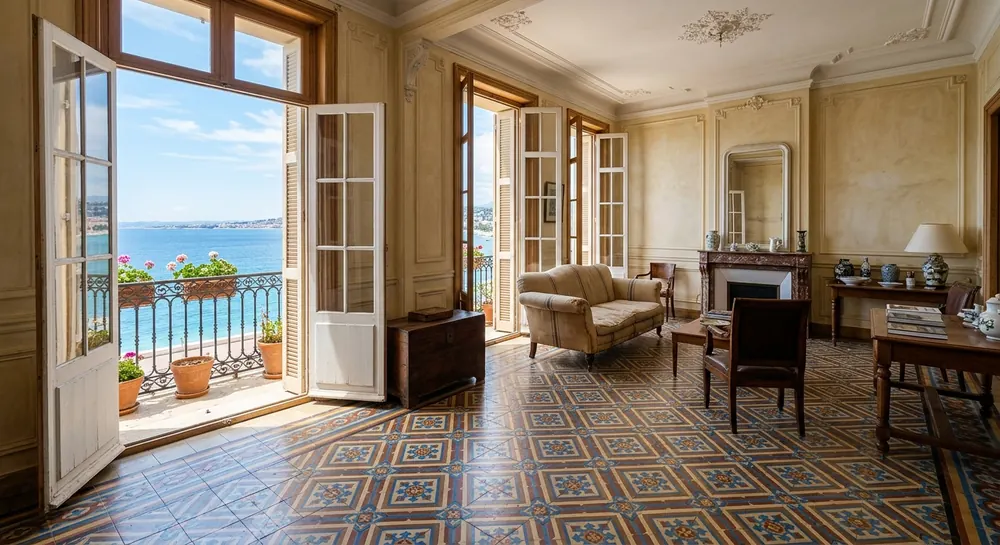
Walk into almost any building constructed between 1880 and 1930 along Rue de France, Avenue Jean Médecin, or the quieter streets behind Place Masséna, and there is a fair chance the original encaustic cement tiles are still there, buried under decades of linoleum, carpet glue, or a hasty 1970s parquet overlay. I have pulled up more than one client's living-room carpet in Cimiez to find a geometric ciment floor in near-perfect condition, simply because nobody wanted the hassle of removing it fifty years ago. These tiles, made by pressing pigmented cement layers under hydraulic pressure rather than firing them like ceramic, were the flooring of choice for the Niçois bourgeoisie during the belle-époque building boom, and Nice still has one of the densest concentrations of original installations on the French Riviera.
The first step is always a proper inspection before you assume anything is beyond repair. Lift a corner discreetly, check for hollow sounds that indicate a detached tile, and look at the surface wear pattern: honest foot traffic wear near a doorway is very different from water damage radiating from a bathroom wall, which often means the substrate underneath has degraded too. In my experience inspecting pre-1930 apartments around Rue Gioffredo and the Musiciens district, roughly six buildings out of ten still have at least partial original flooring surviving in entryways, corridors, or the formal salon, even when the kitchen and bathroom were redone decades ago. That survival rate alone is reason enough to have a specialist look before you default to ripping everything out and starting from zero.
Assessing Damage and Deciding What Can Genuinely Be Saved
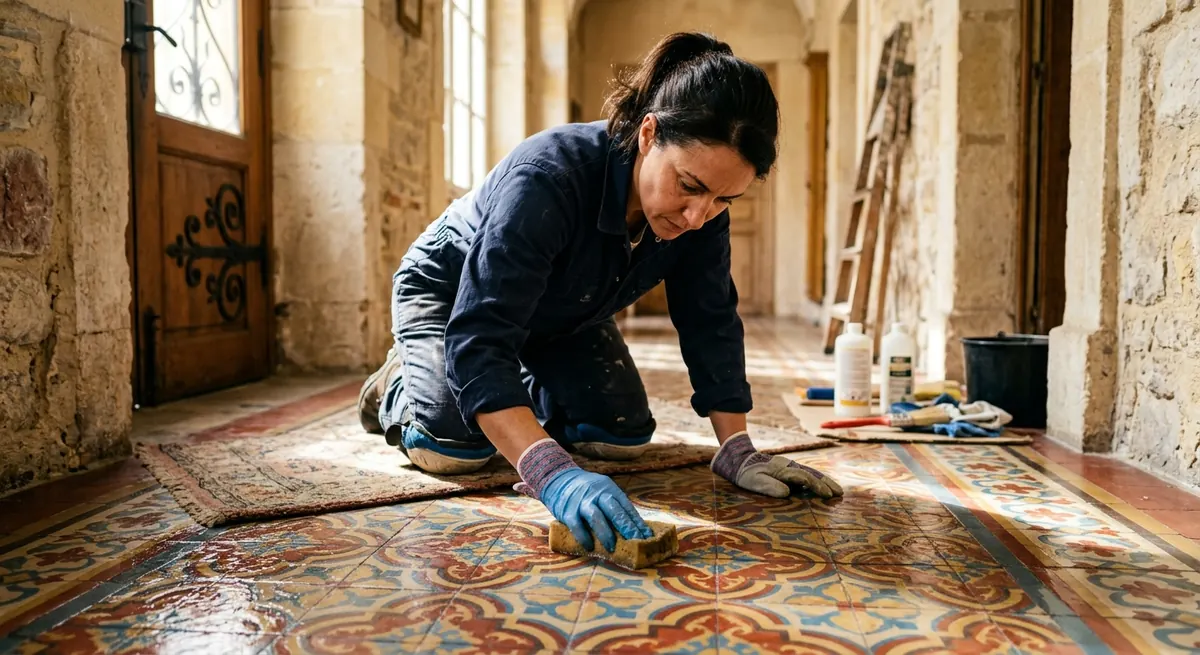
Not every damaged tile needs replacing, and that distinction matters both for your budget and for the authenticity of the finished floor. Hairline surface crazing, faded pigment from decades of sun exposure through south-facing windows, and old wax buildup are all cosmetic issues that a skilled restorer can address through mechanical sanding, acid-free cleaning, and re-waxing, typically for between 35 and 60 euros per square meter depending on the floor's condition and the complexity of the pattern. Structural problems are a different story: cracked tiles with movement, missing corners, or sections where the cement substrate itself has failed due to water infiltration from an upstairs bathroom need either careful tile-by-tile replacement or, in worst cases, a full re-bedding of that section. I have seen this exact scenario in a Liberation-district building where a leaking shower had quietly destroyed eight square meters of flooring over twenty years before anyone noticed the telltale efflorescence staining.
Pricing a full restoration job realistically means separating labor from unknowns. A straightforward clean-and-reseal on an intact floor of 15 to 20 square meters, the size of a typical entrance hall and corridor in an Antibes or Cannes-la-Bocca apartment, runs about 900 to 1,600 euros including product costs and two days of skilled labor. Add structural repair, sourcing period-matching replacement tiles, and re-leveling a damaged substrate, and costs climb quickly toward 2,500 to 4,000 euros for the same surface area. The variable that catches owners off guard almost every time is substrate repair: if the original mortar bed has deteriorated under a bathroom or kitchen extension, you are looking at demolition, waterproofing membrane, new screed, and a curing period of at least three weeks before tiles can even be relaid, which is why any serious quote should include a moisture reading of the subfloor before final pricing.
Finding and Matching Original or Reproduction Tiles for Missing Sections
When you need replacement tiles to complete a damaged section, your first move should be checking architectural salvage yards rather than ordering new reproductions immediately, because reclaimed original tiles from demolished buildings in the same era and region tend to match both pigment aging and dimensional tolerance far better than brand-new pieces. Récupération Nice and several dealers operating out of the industrial zones near Saint-Isidore regularly handle lots salvaged from renovation sites in Vieux-Nice, Cimiez, and even occasionally Monaco, with prices for genuine period tiles ranging from 25 to 70 euros per piece depending on pattern rarity and condition. A geometric star pattern common in 1900s Niçois hallways is relatively findable; a custom monogrammed tile commissioned for a specific family villa is not, and you should expect to pay accordingly or consider a sympathetic reproduction instead.
For reproductions, several French manufacturers still produce encaustic cement tiles using the traditional hydraulic press method rather than printed ceramic imitations, and the difference in both appearance and longevity is significant, so insist on hydraulic pressing when sourcing. Expect to pay between 80 and 150 euros per square meter for quality reproductions from workshops in the Var or further afield in the Cévennes, where several small producers have kept traditional molds and pigment recipes from the same period as Nice's belle-époque boom. Bring a sample of your existing tile, or at minimum detailed photographs with a color reference card, to any supplier before ordering, because cement pigments shift subtly with age and sunlight exposure, and a technically accurate pattern in the wrong shade will stand out glaringly against fifty-year-old originals rather than blending in.
Protecting the Floor Once It Is Restored: Sealing, Waxing, and Daily Care
Encaustic cement tiles are porous by nature, which is both their charm and their vulnerability, and getting the sealing process wrong is the single most common mistake I see even among well-intentioned renovators in the region. After any restoration or new installation, the tiles need a minimum curing period of three to four weeks before any sealant is applied, because sealing too early traps residual moisture and causes the characteristic cloudy white haze that ruins pigment vibrancy. Once cured, a breathable, penetrating sealer rather than a surface film is essential; several Niçois restoration specialists favor a traditional linseed-based treatment followed by carnauba wax finishing, which typically costs an additional 15 to 25 euros per square meter but produces a depth of color and durability that synthetic acrylic sealers simply cannot match over a twenty-year horizon.
Daily maintenance afterward is refreshingly simple but non-negotiable if you want the floor to last another century the way it has already survived the first one. Avoid ammonia-based or highly acidic cleaning products entirely, since they will etch the surface and dull the pigment within months; a simple pH-neutral soap diluted in warm water is sufficient for routine cleaning. Re-waxing every twelve to eighteen months in high-traffic areas like an entrance hall, and roughly every three years in lower-traffic rooms, keeps the protective layer intact without requiring full stripping and resealing, which is a far more invasive and costly process you want to avoid needing more than once every fifteen to twenty years. Owners in humid ground-floor apartments near the Promenade des Anglais should also watch for rising damp from below, since even a perfectly restored floor will suffer if moisture is migrating upward through an inadequately waterproofed foundation.
Frequently asked questions
For an intact floor needing only cleaning and resealing, expect 35 to 60 euros per square meter. If tiles are cracked or the substrate is damaged, costs rise to 2,500 to 4,000 euros for a typical 15 to 20 square meter entrance hall, including repair and matching replacement tiles.
Yes, usually through thickness, pigment depth, and slight irregularities in hand-pressed originals versus the more uniform finish of reproductions. A specialist can also check the back of a tile for the characteristic layered cement structure, which printed ceramic imitations do not have.
Architectural salvage dealers near Saint-Isidore and specialists handling demolition lots from Vieux-Nice and Cimiez buildings are your best source for period-matched originals, typically 25 to 70 euros per tile, with hydraulic-pressed reproduction workshops in the Var as a reliable backup option.