
Why Nice Cleaning Standards Are Different From the Rest of France
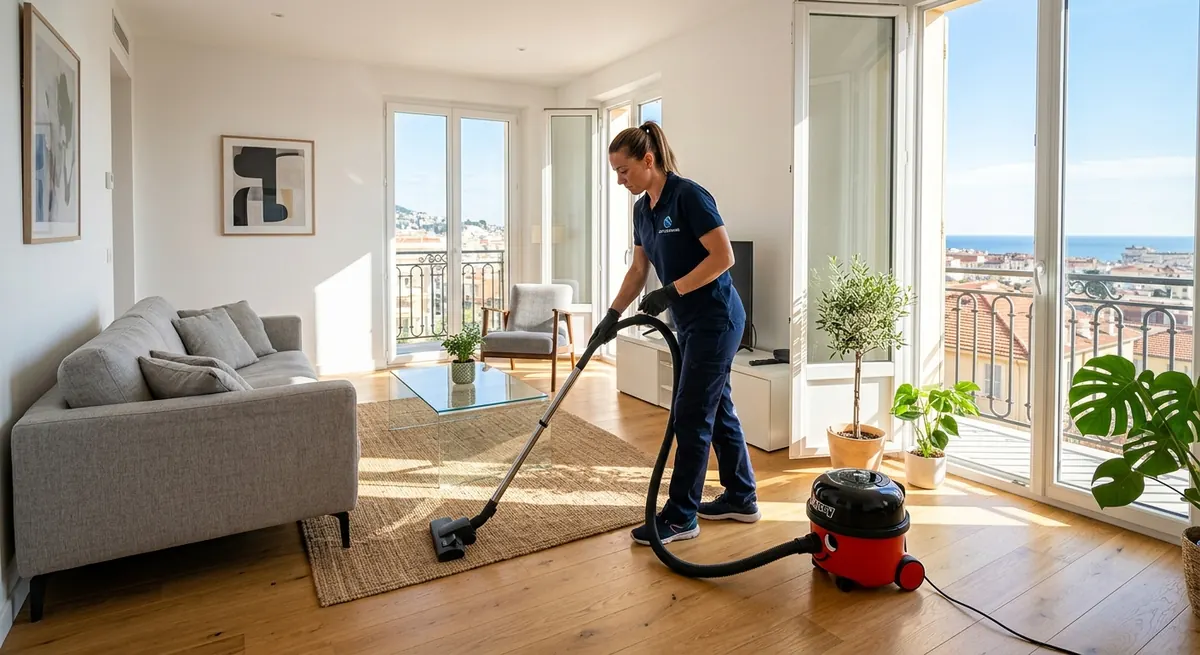
Nice runs on two parallel rental economies, and they do not forgive the same mistakes. A long-term tenant leaving a two-bedroom on Rue de France after three years faces a different bar than an Airbnb guest checking out of a studio near the Promenade after four nights, but landlords who mix up the two standards end up losing money in both directions. For classic leases, the reference point is the état des lieux de sortie compared line by line against the état des lieux d'entrée, and French courts lean heavily on the grille de vétusté (wear-and-tear scale) rather than a spotless-kitchen ideal. For furnished tourist rentals, the standard is entirely commercial: the next guest expects hotel-level cleanliness within a two-to-three hour turnaround window, and a single bad review about hair in the shower drain costs you more than any deposit dispute ever could.
I learned this the hard way managing a portfolio of six apartments between Le Port and Cimiez. On the long-lease side, a tenant who left a slightly yellowed bathroom silicone joint after four years is not liable for replacement — that is normal ageing, and any bailiff or conciliation commission (commission départementale de conciliation) will side with the tenant if you try to charge for it. On the seasonal side, that same yellowed joint would tank your Airbnb rating within a week. Understanding which regime applies to which property, and briefing your cleaning company accordingly, is the single biggest lever landlords in Nice underuse. Most disputes I have witnessed came not from dirty apartments but from owners applying Airbnb-grade expectations to a nine-year lease, or applying casual long-term standards to a rental generating four hundred euros a night in July.
The Room-by-Room Checklist That Actually Prevents Complaints
Start with the kitchen, because it is where 40% of deposit and review disputes originate in my experience. For end-of-lease turnovers, check inside the oven (grease buildup is chargeable, normal patina is not), behind the fridge, inside the extractor hood filter, and the underside of cabinet doors where splash marks accumulate over years. For Airbnb turnovers, add the kettle for limescale — Nice's water is notably hard, and a chalky kettle is the number one complaint international guests mention in private messages before it ever hits a public review. Budget an extra fifteen minutes per turnover just for descaling if your property is anywhere between Nice and Antibes, where the water hardness runs consistently above 25°f.
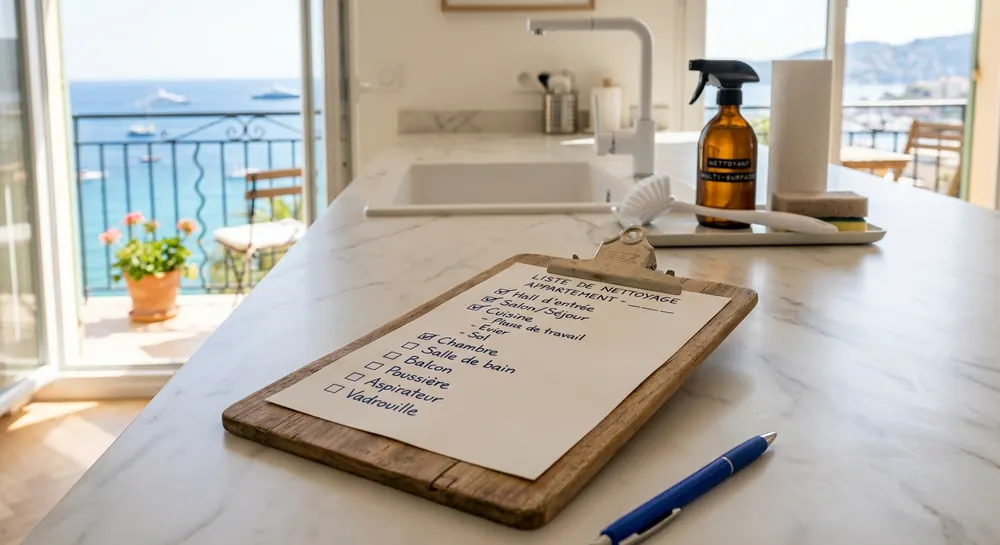
Bathrooms and bedrooms need their own separate protocols. In bathrooms, check grout lines, the underside of the toilet rim, and shower curtain rails for mould — Riviera humidity between June and September accelerates mould growth dramatically, and a property left closed for even five days can develop black spots on silicone that were not there at checkout. In bedrooms, strip and inspect mattress protectors under natural light, not just under the room's ambient lighting, since stains often only show at an angle. For long-term lease exits, photograph every wall for nail holes and scuff marks before repainting — French deposit law lets you deduct for genuine damage but not for repainting an entire apartment because of light wear, a distinction that trips up nearly every first-time landlord I have coached. Keep a fixed 25-point checklist on your phone (kitchen, bathroom, bedrooms, living areas, entryway, balcony) and require your cleaner to send five timestamped photos per zone — this single habit resolved more of my disputes than any lawyer ever did.
What Cleaning Actually Costs in Nice, Cannes and Monaco Right Now
Pricing on the Riviera varies more by neighborhood and season than almost anywhere else in France. A standard Airbnb turnover clean for a studio in central Nice (Jean Médecin, Libération, Vieux Nice) runs €45 to €65 with a local independent cleaner, rising to €70-€90 through an agency like Nickeleco or a conciergerie service that includes linen change and restocking. A two-bedroom apartment turnover typically costs €80-€120, and anything with a sea-view terrace or more than 75m² pushes toward €130-€150 because balconies, shutters, and extra glass surfaces add real time. Move a few kilometers toward Cannes during festival season (May) or Monaco year-round, and expect a 30-40% premium — Monaco cleaners routinely charge €130-€180 for a one-bedroom simply because of the principality's cost structure and client expectations.
End-of-lease deep cleans are priced differently, usually as a flat quote rather than hourly, because the scope is larger and one-off: expect €150-€220 for a studio or one-bedroom vacated after a standard tenancy, €250-€380 for a family apartment of 90m²+, and add €50-€80 if the previous tenant left significant grease buildup, smoking residue, or pet hair requiring specialist treatment. Antibes and Juan-les-Pins sit close to Nice pricing, maybe 10% below, while properties right on the Promenade des Anglais or in Fontvieille command the Cannes-Monaco premium regardless of the actual work involved, purely because of address. My advice to landlords: get three quotes every single time rather than defaulting to your usual cleaner, because I have seen identical 60m² apartments quoted anywhere from €160 to €340 for the exact same end-of-lease scope, and the gap rarely correlates with quality.
Avoiding Deposit Disputes: The Paperwork That Holds Up in Conciliation
French deposit law (loi ALUR, article 22) gives you one month to return the dépôt de garantie if the état des lieux de sortie matches the entry report, and two months if you are making deductions. Miss that window and the tenant can claim 10% interest per month of delay, which sounds trivial until you realize it applies retroactively and adds up fast on a €1,200 deposit for a Fleurs-neighborhood two-bedroom. The single most effective habit I have adopted after two genuinely painful conciliation hearings is commissioning a professional état des lieux with a licensed huissier or a specialized agency (around €120-€180 in Nice) for any property worth more than €900/month rent, rather than doing it yourself with a phone camera and good intentions. It costs money upfront but it removes almost all ambiguity later, because the report is dated, itemized, and carries legal weight that your own photos simply do not.
The second habit is treating your cleaning invoice as evidence, not just a service record. Ask your cleaning company for a detailed invoice listing specific issues found (not just cleaning stains, but oven grease removal, limescale treatment, mould remediation) with photos attached and dated. When a tenant disputes a €280 deduction for a deep clean, a generic invoice saying menage complet will lose in conciliation almost every time, while an itemized invoice referencing the grille de vétusté and showing before-photos wins the majority of cases I have tracked informally among landlord contacts in the Alpes-Maritimes. Finally, never deduct for cleaning that falls under normal wear — courts in the region consistently reject charges for general dust, minor limescale on taps after a standard tenancy, or faded paint, reserving deductions for genuine negligence like burn marks, unremoved grease, or damage from pets not disclosed in the lease.
Building a Cleaning System You Can Actually Rely On
Whether you manage one Airbnb or a small portfolio across Nice and Antibes, the biggest operational risk is not price but reliability — a no-show cleaner during a July turnover between two back-to-back four-night bookings can cost you a full refund plus a one-star review. I now insist on a written service agreement with any cleaning provider, even informal ones, specifying response time (I require confirmation within two hours of a same-day request), backup coverage during their holidays, and a fixed checklist they sign off on per job. Agencies charge 15-25% more than independents for exactly this reliability layer, and for properties generating over €25,000 a year in bookings, that premium is cheap insurance rather than an expense.
Build redundancy deliberately: keep at least two vetted cleaning contacts per property, because the Riviera's seasonal labor market tightens dramatically between June and September when demand from hotels and villas pulls independent cleaners away from smaller Airbnb jobs. I also recommend a standing supply kit stored on-site (descaler, mould treatment, extra bedding, a steam cleaner for grout) so your cleaner never has to improvise or skip a step because a product ran out mid-turnover. Finally, revisit your checklist and pricing agreement every spring before the season ramps up — labor costs on the Côte d'Azur have crept up steadily, and a contract negotiated two years ago at €50 per studio turnover is probably underpaying your cleaner today, which is the fastest way to lose your most reliable person right when you need them most.
Frequently asked questions
For a standard one-bedroom apartment after a normal tenancy, expect €150-€220 for a professional deep clean; a larger family apartment over 90m² typically runs €250-€380, with Monaco and central Cannes pricing 30-40% higher for comparable work.
Yes, but only for genuine negligence beyond normal wear, such as unremoved grease, mould from lack of ventilation, or heavy stains — French law and local conciliation commissions consistently reject deductions for normal dust, faded paint, or standard limescale after a typical lease.
One month from the end of the lease if the état des lieux de sortie matches the entry report exactly, or two months if you are making deductions for damage — missing this deadline triggers a 10% monthly interest penalty on the unpaid amount.