
What the DPE Measures, and Why Pre-War Nice Apartments Start at a Disadvantage
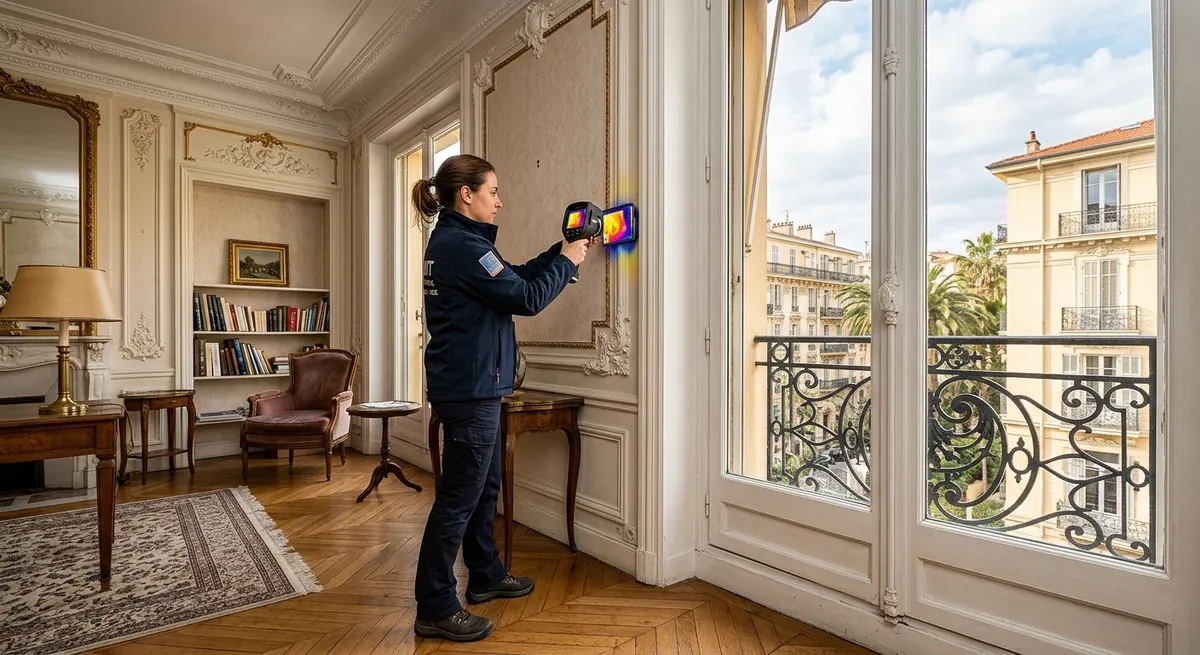
The Diagnostic de Performance Energetique is not a vague opinion from a visiting technician, it is a calculation method called 3CL-DPE that feeds your building's characteristics into a standardized formula: wall and roof composition, glazing type, heating and hot water system, ventilation, and the building's overall shape factor. The diagnostiqueur measures room by room, checks the chaudiere or electric convectors, looks at window frames, and often pokes a probe into a wall cavity if accessible. For a 55 to 75 m2 apartment in Nice, the visit plus report typically runs 110 to 220 euros, takes 60 to 90 minutes, and the certificate is valid for ten years unless you renovate in the meantime, in which case getting it redone after works, for about 150 euros, is worth it to lock in the improved letter.
Apartments built before 1948, which describes a large share of Vieux Nice, Libération, Riquier and parts of Cimiez, were built with thick stone or rubble masonry walls, single-glazed wooden windows, and often no cavity for insulation at all. That construction keeps interiors pleasantly cool in August, which owners love to mention, but the 3CL formula does not reward summer comfort, it penalizes heating losses in winter and the absence of any insulation layer. A stone wall 50 cm thick with no render insulation can still show a U-value worse than a modern 20 cm cavity wall, simply because mass is not the same as thermal resistance in the calculation. This is precisely why so many beautiful, structurally sound belle-epoque apartments on boulevard Gambetta or rue de France come back rated E or F, to the genuine surprise of owners who assumed old stone equals good insulation.
Reading Your Result: The Two Letters and What a D, E or F Really Means Here
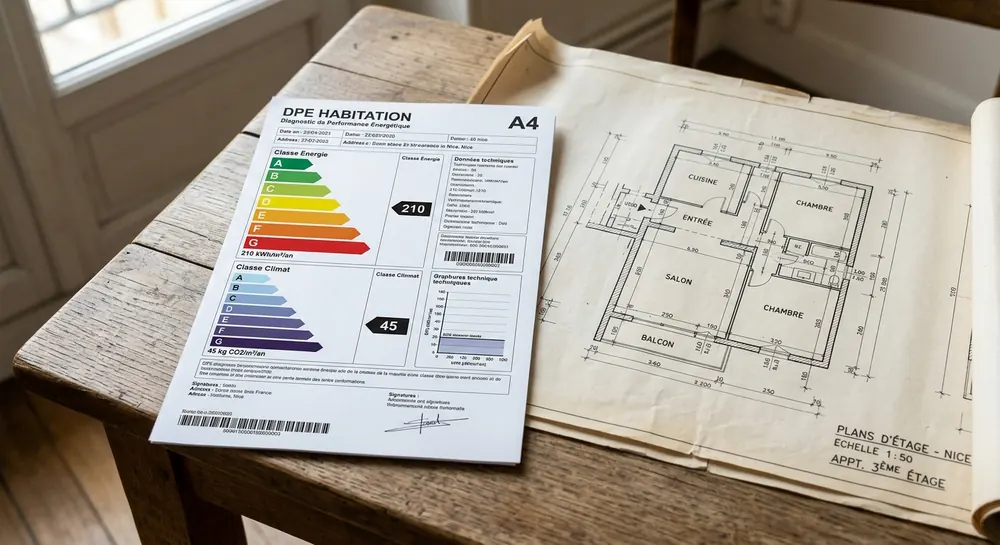
The DPE gives you two separate letters, one for energy consumption in kWh per square meter per year, one for greenhouse gas emissions in kilograms of CO2 equivalent, and they do not always match. An apartment heated by an individual gas chaudiere can land on energy letter D but climate letter E, because gas burns cleaner on the efficiency side than on the carbon side compared to electricity, which is unusually decarbonized in France thanks to the nuclear-heavy grid. In Nice specifically, I see a lot of F-rated apartments in buildings with collective oil-fired heating converted decades ago, versus D or even C ratings in flats that switched to electric heat pumps after a copropriété vote, even when the walls themselves never changed.
Since the 2025 reinforcement of rules, F and G classed apartments, labeled passoires thermiques, face rent freezes and from 2028 an outright rental ban unless renovated, which has pushed many landlords in Nice's rental-heavy neighborhoods like Riquier and Saint-Roch into urgent action. Sellers face a softer but real consequence: since 2022 all listings must display the DPE letter prominently, and buyers' banks increasingly ask questions when financing an F or G, sometimes requiring a renovation quote to be annexed to the compromis de vente. A one-letter jump, say from F to E, can realistically add 15,000 to 30,000 euros to perceived value on a 60 m2 apartment in the current Nice market, simply because it removes the legal and financing friction for the next buyer.
The Renovations That Actually Move a Letter, Cheaply, in a Stone Building
Forget full exterior insulation (ITE) as a first move in central Nice, it is usually impossible on protected facades in Vieux Nice or Carré d'Or and costs 180 to 250 euros per square meter where it is even authorized. The highest-value cheap fix in almost every old Nice apartment I have audited is attic or roof-void insulation where accessible, because heat loss through an uninsulated top-floor ceiling can represent 25 to 30 percent of total losses; blown cellulose or rock wool at 30 to 40 euros per square meter, done in a day, often moves a borderline E to a clean D on its own. Right behind that comes replacing single-glazed wooden windows with double-glazed units respecting the original frame profile, which Architectes des Bâtiments de France will usually approve in protected zones if the mullions and shutters are preserved; budget 450 to 750 euros per window installed, and for a typical three-window living room facing the sea this is 1,500 to 2,200 euros that can shave 10 to 15 kWh/m2/year off consumption.
Heating system swaps deliver the next best euro-for-letter ratio. Replacing an ancient individual gas chaudiere from the 1980s with a modern condensing unit costs 3,500 to 5,500 euros and typically improves efficiency by 20 to 25 percent, often enough alone to move half a letter grade; switching to a reversible air-to-air heat pump system, increasingly common in Fabron and Saint-Isidore renovations, runs 4,000 to 7,000 euros for a 60 m2 flat and tends to help both the energy and climate letters simultaneously because electricity's carbon coefficient is so favorable. Cheaper still, and frequently ignored, is installing a programmable thermostat with individual room valves (robinets thermostatiques) for 200 to 400 euros total, plus sealing obvious air leaks around old window frames and under doors with foam strips and silicone for under 150 euros; these two together can shift the calculated consumption by 5 to 8 percent, sometimes just enough to cross a letter threshold that a bigger, pricier intervention would have overshot anyway.
Sequencing the Work: What to Do First If You Are Selling or Renting Within 12 Months
If a sale or new lease is imminent, do not start with the most expensive intervention, start with the one that moves the letter at the lowest cost per point, then get the DPE redone before committing to anything bigger. My usual sequence for a pre-war Nice apartment targeting a quick sale: first the attic insulation and thermostatic valves (budget under 2,000 euros combined), then a fresh DPE for about 150 euros to see where you stand, then decide whether window replacement or a chaudiere swap is worth the additional spend given your timeline and the copropriété's rules on facade modifications. I have seen owners jump straight to a 15,000 euro full renovation with ITE and new heating only to discover afterward that the roof insulation alone would have delivered 70 percent of the letter improvement for a tenth of the price.
For rentals specifically, remember that copropriété-level decisions matter enormously: if your building's collective heating or hot water system is outdated, an individual effort inside your own lot may hit a ceiling, because a meaningful share of the DPE calculation depends on shared infrastructure you do not control alone. It is worth raising the topic at the next assemblée générale, since collective works like replacing an old fuel oil boiler with a connection to Nice's expanding reseau de chaleur urbain, where available in parts of L'Ariane and Nice Nord, can be subsidized through MaPrimeRenov Copropriétés and change every lot's rating at once. Owners who coordinate with neighbors on a single collective renovation file often pay 30 to 40 percent less per lot than those who renovate individually, and the resulting DPE improvement applies building-wide, which is a strong argument to bring to a sometimes reluctant conseil syndical.
Local Realities: Heritage Rules, Coastal Humidity, and How Nice Compares to Cannes, Antibes and Monaco
Protected facades are the single biggest local complication. In Vieux Nice, Cimiez and much of the Carré d'Or, any exterior change, including window replacement that alters visible profiles, shutter color, or render, needs sign-off from the Architecte des Bâtiments de France, and processing can take six to ten weeks, so factor that delay into any pre-sale timeline. Coastal humidity adds a second layer of complexity rarely discussed in generic renovation guides: internal wall insulation (ITI) applied without a proper vapor-permeable system on a stone wall facing the sea, common along the Promenade des Anglais and in Carras, can trap moisture and cause interior mold within two to three winters, so always ask your installer specifically about breathable insulation materials like wood fiber or cork rather than standard polystyrene panels, even if they cost 15 to 20 percent more upfront.
Compared to Cannes, where many pre-war buildings around the Suquet face similar heritage restrictions, and Monaco, where almost all older stock has already been through heavy renovation cycles driven by extremely high resale values, Nice sits in an unusual middle ground: enough old, untouched stock that F and G ratings remain common, but a strong enough market that a modest, well-targeted renovation still pays for itself at resale. Antibes' Vieil Antibes shows the same pattern as Vieux Nice almost exactly, same stone construction era, same heritage constraints, same cheap wins through roof insulation and heating upgrades. If you own in one of these historic cores, the realistic playbook is never a full energy retrofit, it is a short list of two or three targeted interventions chosen for maximum letter movement per euro spent, verified with a fresh DPE before you list or re-lease.
Frequently asked questions
Expect to pay between 110 and 220 euros for a standard apartment of 50 to 90 square meters, with price depending on size, accessibility and whether the diagnostiqueur also handles other mandatory diagnostics like amiante or electricity in the same visit.
Yes, selling is still legal at any DPE letter, but you must disclose it prominently in the listing, buyers' lenders may request a renovation estimate, and F or G ratings now typically lower negotiated price by an amount roughly equal to the cost of the cheapest effective renovation, often 15,000 to 25,000 euros on a 60 square meter flat.
Roof or top-floor ceiling insulation, usually blown cellulose or rock wool at 30 to 40 euros per square meter, delivers the best letter improvement per euro spent because uninsulated roofs typically account for a quarter to a third of total heat loss in pre-war Nice apartments.