
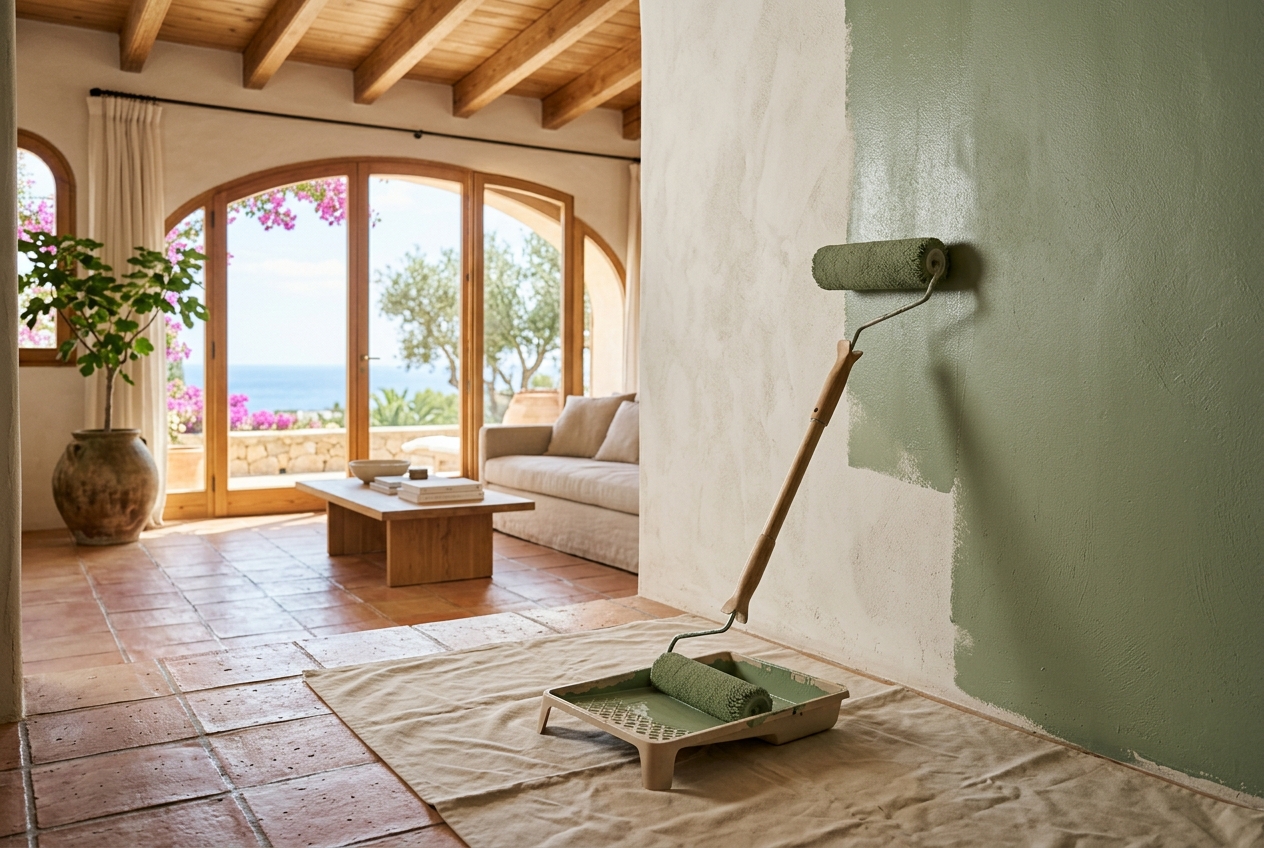
Which Paint to Choose for Apartment Walls
Water-based acrylic and latex paints are the go-to options for residential spaces in Nice. They dry quickly, produce minimal odour and are easy to clean — a real advantage in kitchens and hallways. Latex formulas offer superior moisture resistance, which matters along the Côte d'Azur where Mediterranean humidity can take its toll on interior surfaces.
For bedrooms and living rooms, matte or eggshell finishes work best, as they conceal minor wall imperfections and contribute to a warm, welcoming feel. Bathrooms and kitchens call for satin or semi-gloss paints with anti-mould additives. If you are unsure which product suits your space, the vetted painters on Build in Nice can guide you through the selection process.
Calculating Paint Coverage: Getting It Right
Standard wall paint coverage is roughly 120 to 180 ml per m² per coat. For a flat with a total wall area of around 60 m², two coats will require approximately 15 to 20 litres of paint. The exact figure depends on surface porosity, paint type and application method — roller, brush or spray gun.
Always add a 10–15% buffer for touch-ups and unexpected areas. Professional painters working through Build in Nice provide a detailed, fixed quote before any work begins, so you always know exactly what you will spend.
Preparing Walls Before Painting
The quality of the finished result depends heavily on proper surface preparation. Old paint or wallpaper must be removed, cracks filled and sanded, and a primer applied before any topcoat goes on. Priming improves paint adhesion and can reduce overall paint consumption by 15 to 20 %.
In Nice apartments — especially in older buildings in the city centre or around the Old Town — walls often feature textured surfaces or flaking plaster that require careful attention. In these cases, professional preparation is not optional. You can book a full end-to-end painting service through Build and benefit from the skills of verified, reviewed contractors.
Wall Painting Costs in Nice
The price of painting apartment walls in Nice depends on the surface area, complexity of the job and materials chosen. As a general guide, expect to pay between €15 and €35 per m², including surface preparation and two coats of paint. Decorative finishes such as Venetian plaster or lime wash will typically cost more.
On Build, you can receive multiple quotes from different painters and compare them by price, timeline and customer reviews. All contractors on the platform work with transparent, fixed pricing — no hidden fees.
How to Book a Painter in Nice Through Build
Hiring a professional painter in Nice via Build is straightforward: describe your project, provide the surface area and your preferred schedule, and receive offers from qualified professionals within hours. Every painter on the platform has been verified and has a proven track record.
Build takes the hassle out of finding a reliable contractor — no endless phone calls or sifting through classified ads. Compare prices, read real reviews and book your apartment painting project in Nice with complete confidence.
Frequently asked questions
A 20 m² room with 2.5 m ceilings has roughly 30 to 35 m² of wall surface. Applying two coats at 150 ml/m² means you will need around 9 to 11 litres of paint, including a safety margin for touch-ups.
For bathrooms and kitchens, choose an acrylic or latex paint with anti-fungal additives rated as 'washable' or 'highly washable'. Given Nice's Mediterranean climate, this level of protection is essential to prevent mould growth on walls.
Technically yes, but it is not recommended. Primer improves adhesion, evens out surface absorption and reduces the total amount of topcoat needed. Professional painters always include this step in their quotes, and for good reason.