
Why the Old Riviera Garden Model Is Finished
I have walked enough gardens in the hills above Cannes and along the Antibes cap to say this plainly: the English-lawn-plus-hibiscus-hedge model that defined Riviera villa gardens for fifty years is no longer compatible with how water is managed here. The Préfecture des Alpes-Maritimes has issued crisis-level restriction arrêtés in July or August for several consecutive years now, and the pattern is not an anomaly, it is the new baseline. Under level orange or rouge, watering lawns and ornamental beds is banned between 11am and 6pm, and in rouge periods it is banned outright except for drip irrigation on fruit trees and vegetable gardens. A villa in Mougins with 1,200 m2 of turf that used to drink 400-500 m3 a season now faces months where that water simply cannot be applied, and the grass dies anyway while the owner pays for pipework they cannot use.
Water pricing compounds the pain. Through Veolia or the Régie des Eaux in Nice, Cannes and Antibes, domestic water with assainissement now runs close to 4.3-4.8 euros per m3 once you add the fixed abonnement and redevances. A large lawn-heavy garden in Valbonne or Mouans-Sartoux can push a summer water bill to 1,800-2,500 euros for three months alone, on top of the irrigation system maintenance. Clients who redesign toward genuinely Mediterranean planting routinely see that figure fall to 400-700 euros for the same period, not because they water less often out of deprivation, but because the plants and the delivery method both need far less volume to thrive. This is the real argument for change: it is not aesthetic purism, it is a straightforward cost and compliance calculation that pays for itself within two to four seasons.
Picking Plants That Actually Thrive Here, Not Just Survive
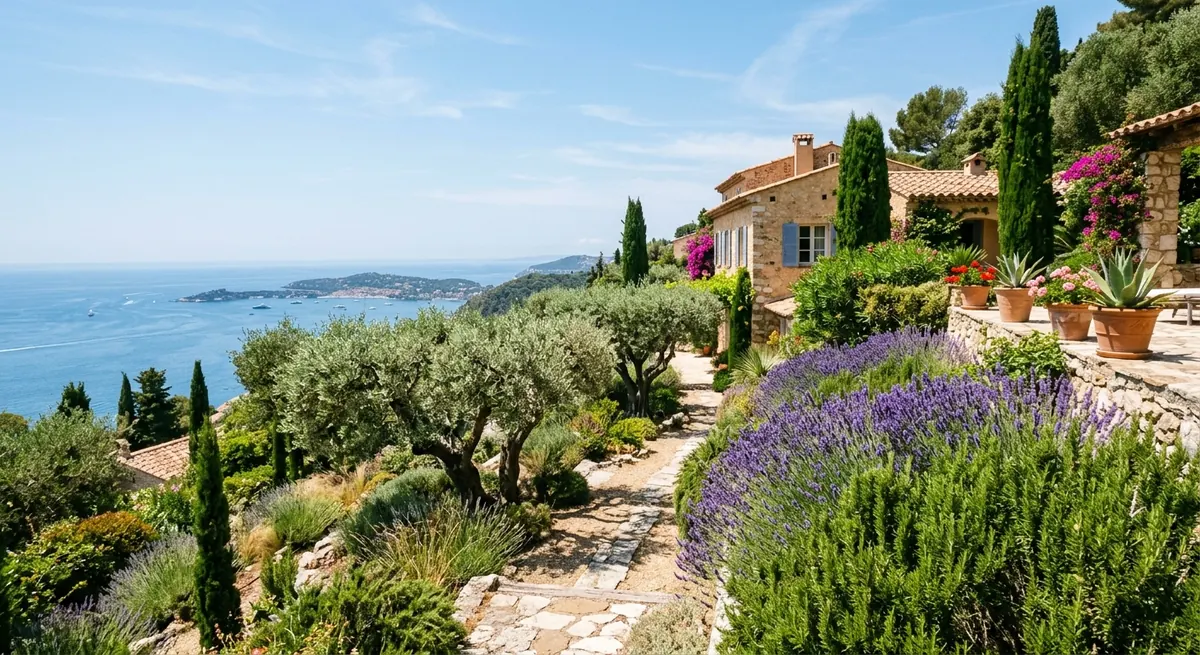
The species list that works on this coast is well known to anyone who has gardened from Menton to Mandelieu, but owners still get talked into the wrong choices by generalist landscapers. Olea europaea (olive), Pinus pinea, Quercus ilex and Cupressus sempervirens form the structural backbone and need almost no irrigation once established after two summers. Beneath them, lavender (Lavandula angustifolia and the hardier L. stoechas), rosemary, cistus, santolina, and Mediterranean euphorbias handle full sun on the thin, stony soils typical of the Pre-Alpes foothills behind Grasse and Vence. For texture and movement, ornamental grasses like Stipa tenuissima and Pennisetum alopecuroides give a contemporary look that reads well against stone walls and pool decks in Cap d'Antibes properties, and they cost roughly 8-15 euros per pot at nurseries like Pepinieres du Val d'Argens or local Jardiland outlets when bought at 3-liter size for mass planting.
The mistake I see most often is mixing these true xerophytes with thirsty exotics like hydrangeas, azaleas or expansive agapanthus beds and then irrigating the whole bed on one circuit at the rate the hydrangeas need. That overwaters the drought-tolerant plants, which actually rot at the root in heavy clay if given too much summer water, and it defeats the entire water-saving strategy. The fix is strict hydrozoning: group plants by water need into three or four zones, typically no-irrigation-after-establishment, low (one deep watering every 10-15 days), and moderate (a small pocket near the house for a herb garden or a few prized citrus). For a typical 1,000 m2 villa garden in the Nice backcountry, a full plant palette replacement including removal of old lawn and planting of structural trees, shrubs and groundcover generally runs 18,000-35,000 euros depending on the size of specimen trees chosen, with olive trees alone costing 400-1,500 euros each for a mature 60-100 cm trunk circumference specimen.
Designing Irrigation That Matches the New Rules
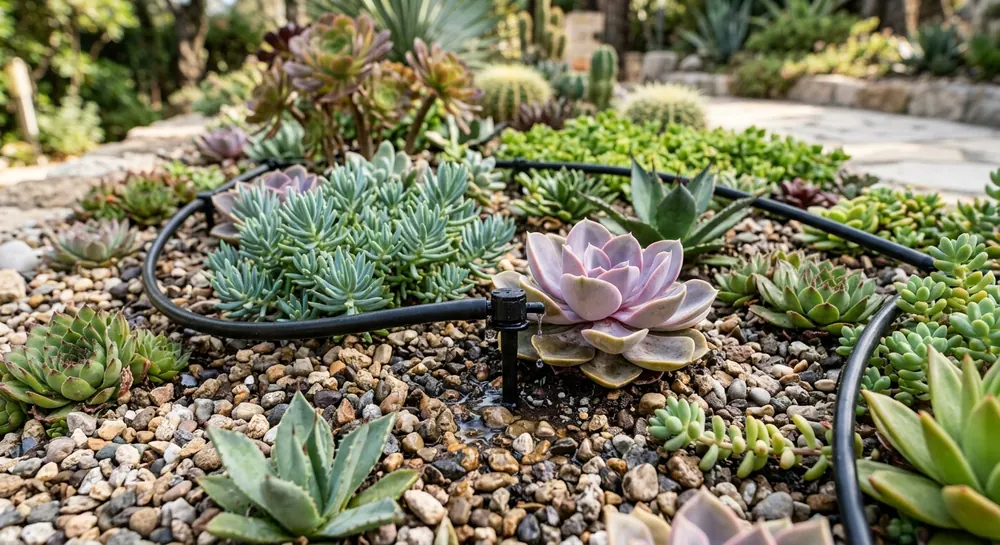
Drip irrigation is no longer a nice-to-have, it is the only system that remains legally usable during the strictest drought phases, since arrêtés specifically exempt drip (goutte-à-goutte) from the daytime watering ban because it applies water directly to the root zone with minimal evaporation loss. A well-designed system for a Mediterranean bed uses pressure-compensating drippers, typically Netafim or Rain Bird XF series lines, delivering 2-4 liters per hour per emitter, buried under 5 cm of mulch so evaporation loss drops further still. For established xerophytic planting, I design for one or two drip cycles a week of 45-60 minutes rather than daily light watering, because infrequent deep watering trains root systems to go deep and search for moisture, exactly the resilience you want going into a dry August in Grasse or Vallauris.
Smart controllers make the real difference in compliance and savings. A Hunter Hydrawise or Rain Bird ESP-TM2 controller linked to a local weather station or soil moisture sensor will automatically skip a cycle after rain and adjust run times for heat spikes, and most can be geofenced to the exact restriction calendar published by the préfecture so the system simply will not run during banned hours. Installation for a mid-size villa garden of 600-900 m2, including trenching, drip lines, filtration, a smart controller and 3-4 independent zones, typically costs 6,000-12,000 euros through an installer like those found via Bergerat or local firms around Antibes and Mandelieu, and most of that cost is labor for trenching rather than the materials themselves. Retrofitting an old spray-head lawn system into drip zones is usually cheaper, around 3,500-7,000 euros, since the mainline and valve boxes often remain usable.
Real Budgets and the Payback Timeline
Owners always ask me for a single number, and there is not one, because the spread between a modest Grasse hillside plot and a 2,000 m2 Cap Ferrat-style estate is enormous. As a working range, a full garden transformation, meaning turf removal, soil amendment, new Mediterranean planting at reasonable maturity, drip irrigation and a smart controller, lands between 45 and 90 euros per m2 of treated garden area for mid-range specification, rising past 120 euros per m2 if you want large mature olive or pine specimens and high-end stone edging. For a 1,000 m2 garden that means a project budget realistically between 45,000 and 90,000 euros, phased over one or two seasons so the planting establishes properly through at least one full winter before facing its first dry summer.
Payback comes from two places: water bills and reduced irrigation-system maintenance, plus a less visible but real gain in property value, since estate agents in Cannes and Nice increasingly flag Mediterranean, low-water gardens as a selling point for buyers worried about future restrictions. On the direct savings side, a garden that drops from 450 m3 to 120 m3 of summer water use saves roughly 1,400-1,600 euros a year at current tariffs, meaning a 50,000 euro renovation pays back in water savings alone over 30-35 years, which sounds long until you add in avoided lawn-replacement costs (re-turfing a dead 500 m2 lawn after a rouge-level drought summer runs 4,000-7,000 euros on its own), avoided fines for restriction violations, and the simple fact that a Mediterranean garden properly established needs far less gardener time, often cutting a weekly maintenance contract from 4 hours to 1.5 hours, saving another 2,000-3,000 euros a year in labor around Mougins and Valbonne where skilled gardening runs 35-45 euros an hour.
Phasing the Project and Avoiding Costly Mistakes
Do not attempt a full garden conversion in one go during peak season; the single biggest error I see is a villa owner ordering a complete relandscaping in June, planting everything at once, and then hitting an immediate arrêté sécheresse that prevents the deep watering new plants need to establish. The right sequence is to do earthworks and irrigation infrastructure in autumn or late winter (October through February works well on this coast), plant in early spring once frost risk has passed around Nice and Antibes, and let the first summer be a closely monitored establishment phase with whatever watering allowance the restrictions permit, even if that means hand-watering with a bidon rather than running the system, since establishment watering for young plants is usually still tolerated under most arrêté tiers.
Get a written quote that separates the irrigation design from the planting plan, because some landscapers subcontract the irrigation to a cheaper installer who does not actually understand hydrozoning, and you end up with one pressure zone trying to serve both olive trees and a herb garden, which never works. Ask specifically whether the quote includes a post-installation adjustment visit after the first full season, since drip emitter flow rates and cycle timing almost always need tweaking once you see how the soil on your specific plot, whether the heavy clay typical of the Var hinterland or the fast-draining rocky soil around Eze, actually behaves. And keep photographic and invoice records of the whole project: several Alpes-Maritimes communes now offer small subsidies, generally 200-800 euros, for water-saving garden conversions and rainwater harvesting cisterns, and you will need proof of a professional installation to claim them.
Frequently asked questions
Olive trees, cistus, rosemary, lavender (especially Lavandula stoechas), santolina, Phlomis fruticosa, and native Mediterranean grasses like Stipa tenuissima typically need zero supplemental water after two full growing seasons in Riviera soil, provided they were planted correctly with good drainage and a thick mulch layer.
Generally yes. Préfecture arrêtés in the Alpes-Maritimes typically exempt goutte-à-goutte drip irrigation from bans that apply to sprinklers and hosepipes because it delivers water directly to plant roots with minimal loss, though you should always check the specific arrêté text for your commune since exact exemptions can shift between orange, rouge and crise levels.
For a mid-size garden of around 1,000 m2, expect a realistic budget of 45,000 to 90,000 euros for full turf removal, soil preparation, mature Mediterranean planting and a smart drip irrigation system, with payback through lower water bills and reduced maintenance typically visible within three to five years.