
Why Riviera Humidity Eats Ordinary Grout Alive
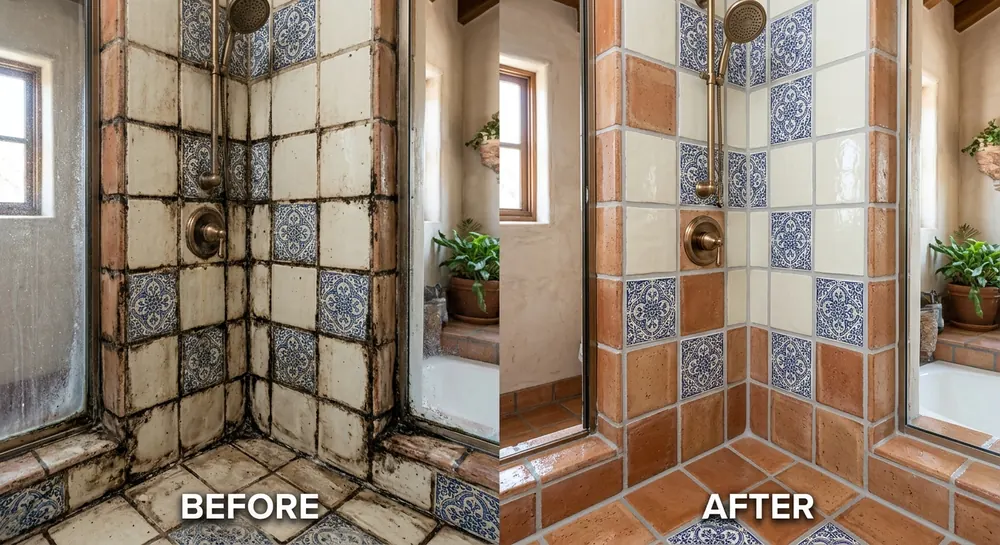
I have re-grouted more showers in Nice Vieux Nice and Antibes old town than I can count, and the pattern is always the same: standard cement grout installed by a previous owner or a rushed contractor starts blackening at the joints within eighteen to twenty-four months. The culprit is not just daily shower steam — it is the combination of sea-salt-laden air drifting in through single-glazed windows, poor through-ventilation in buildings dating from the 1930s to 1960s, and bathrooms that often have no mechanical extraction at all. Salt crystals from sea spray are hygroscopic, meaning they pull moisture out of the air and hold it against surfaces, which keeps grout damp far longer than it would stay in, say, a Lyon apartment with identical shower habits.
Add to that the Riviera habit of closing shutters for weeks during August heatwaves or winter trips to Paris, and you get bathrooms that sit sealed and humid for days on end. In a Cannes penthouse I worked on near the Croisette, the shower room had a small window but it opened onto an internal light well with almost no airflow — the grout there was growing mold within four months of a full renovation using a mid-range sanded joint. That job taught me to stop treating grout choice as a cosmetic decision and start treating it as a building-science one, because on this coast, the wrong product genuinely fails within a single season.
Choosing the Right Grout: Epoxy, Additive Cement, and When to Pay More
For any shower that will see daily use in a coastal property, I now default to epoxy grout rather than traditional cement-based joints, despite the higher upfront cost. Epoxy grout, such as Mapei Kerapoxy Design or Litokol Starlike, runs roughly 35 to 55 euros per kilogram compared with 8 to 15 euros for a quality cement grout with anti-mold additive like Mapei Ultracolor Plus. It costs more to buy and is trickier to apply — it sets faster and needs a specific cleaning technique with a scouring pad before it cures — but it is essentially non-porous, so it does not absorb water or harbor mold spores the way cement grout does, even with additives. On a standard 4 to 6 square meter shower enclosure, the material cost difference between the two options is typically only 80 to 150 euros, which is nothing compared to a full re-grout job down the line.
That said, epoxy is not always necessary or appropriate. In a well-ventilated villa bathroom in the Mougins hills with a proper extractor fan and large opening window, a premium cement grout with biocide additive performs perfectly well for five to seven years if maintained. I reserve epoxy specifically for ground-floor apartments near the Promenade des Anglais, basement-level bathrooms in older Monaco buildings, and any shower that lacks mechanical ventilation. For sanitary silicone sealant at wall-to-floor and corner joints, insist on a dedicated bathroom-grade silicone with fungicide — brands like Soudal or Sikasil HT — rather than a generic DIY-store tube, since the price difference of 3 to 5 euros per cartridge is irrelevant against the labor cost of redoing a failed joint.
Where Waterproofing Actually Fails: The Sealant Joints Nobody Checks
Grout gets the attention, but in my experience it is the silicone sealant joints that fail first and cause the most damage, because they are the first line of defense against water getting behind the tile into the substrate. The classic failure point on Riviera renovations is the corner joint where the shower tray meets two tiled walls — this spot moves slightly with every thermal expansion cycle, especially in villas with underfloor heating common in Villefranche-sur-Mer and Beaulieu properties, and standard silicone cracks there within two to three years if it was applied too thin or without a backing rod. When I inspect a failed shower, nine times out of ten the grout is fine and the corner silicone is black, peeling, and letting water track down into the wall cavity.
The fix is to treat sealant as a consumable, not a permanent fixture: budget for resealing every three to four years at a cost of 150 to 300 euros for a professional to strip and redo all joints on a standard shower, or about 60 to 90 minutes of work if you are comfortable doing it yourself with a proper caulking gun and a 9mm sealant line. On larger walk-in showers I install in Antibes villas, I now always use a neutral-cure silicone with 1 percent silver-ion additive, which costs maybe 4 euros more per tube but visibly resists the gray-black mold bloom far longer in testing I have done across multiple sites. I also always apply a 2mm backing foam rod in movement joints before sealing, which prevents three-sided adhesion and lets the silicone flex properly instead of tearing — a detail that is skipped on probably half the shower installations I see from other contractors.
Applying It Right: Site Sequence, Drying Times, and Real Costs
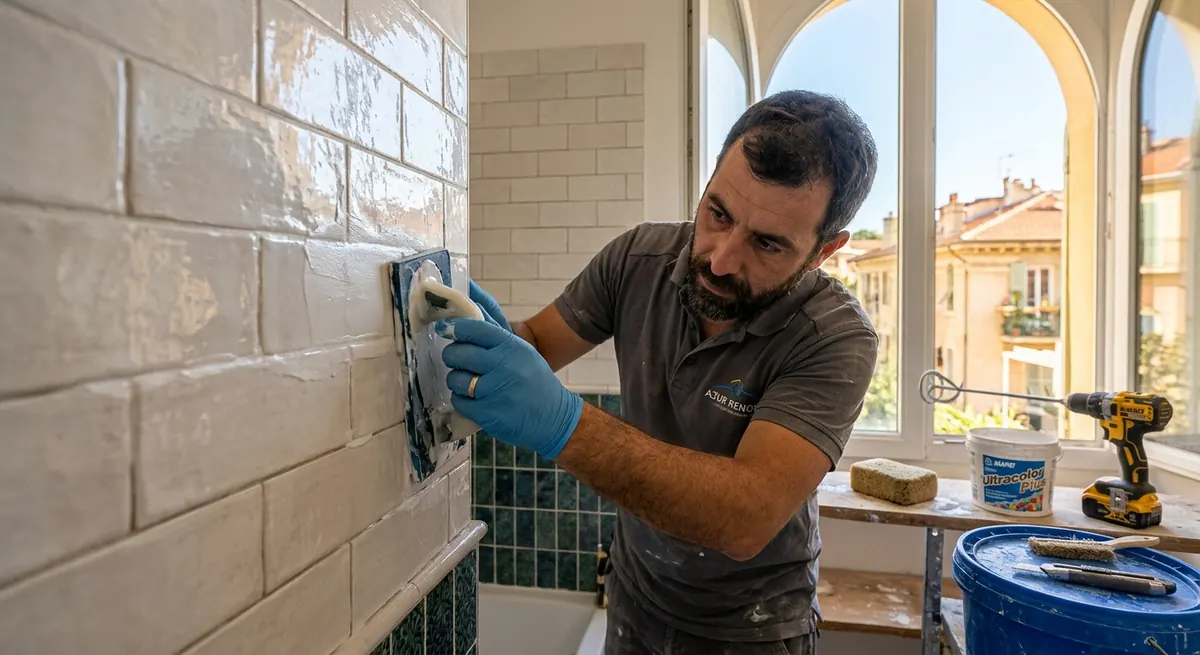
Sequence matters enormously here, and rushing it is the single biggest reason mold-resistant products underperform their promised lifespan. After tiling, cement-based mold-resistant grout needs a minimum 24-hour cure before any water contact, but on the Riviera in summer, with ambient humidity frequently above 65 percent, I push that to 48 hours whenever the client's schedule allows it — a rushed first shower on day one is how trapped moisture gets sealed into joints that never fully cure. Epoxy grout is less forgiving on timing during application itself: it must be worked and cleaned within 20 to 30 minutes before it hardens on the tile surface, so for a full shower enclosure I always bring a second pair of hands for the cleanup pass, which is reflected in labor costs running 25 to 40 euros per square meter higher than cement grout application.
For a realistic full picture: a standard shower re-grout and reseal job on a 5 square meter enclosure in the Nice area, using quality anti-mold cement grout and premium silicone, typically runs 400 to 650 euros including labor if the tiles themselves are sound and just need the joints redone. Step up to full epoxy grout on the same job and expect 650 to 950 euros. If you are mid-renovation and tiling from scratch, factor grout and sealant material at roughly 12 to 20 euros per square meter for standard cement, 35 to 60 euros per square meter for epoxy, plus sealant materials around 40 to 70 euros total for a typical shower's worth of joints. I always tell clients in Monaco and Cap d'Antibes properties, where humidity exposure is highest, that the epoxy premium pays for itself within three years simply by avoiding the full re-grout that a cement joint would otherwise need.
Keeping It Mold-Free for Years: Ventilation and Maintenance That Actually Work
Even the best grout and sealant combination will eventually fail if the bathroom has no way to shed humidity after each shower, and this is where I see Riviera homeowners lose the benefit of money well spent on materials. A simple 100mm extractor fan wired to the light switch, installed by an electrician for roughly 180 to 280 euros including the unit, cuts residual bathroom humidity dramatically and is honestly the single highest-value addition to any shower renovation on this coast — more impactful than any grout upgrade. In older Nice buildings where running new ductwork to an external wall is impractical, a humidity-sensing fan that runs on a timer after you leave the room, rather than tying to the light switch, handles the lingering steam far better and costs only 40 to 60 euros more.
On the maintenance side, a weekly wipe-down of tile surfaces and sealant lines with a squeegee takes under two minutes and prevents the biofilm buildup that eventually defeats even fungicide-treated silicone — I have clients in Cannes who have gone six years without a single black spot simply by making this a habit. Avoid bleach-based daily cleaners on grout, since repeated bleach exposure actually degrades the polymer additives in modern anti-mold cement grout over time; a simple vinegar-diluted solution or a dedicated pH-neutral bathroom cleaner does the job without that side effect. Finally, inspect sealant joints every six months for the first hairline cracks or slight discoloration — catching a failing joint early and resealing a single corner for 20 to 30 euros in materials is infinitely cheaper than waiting until water has tracked behind the tile and you are looking at a partial retiling bill running into the thousands.
Frequently asked questions
Epoxy grout such as Mapei Kerapoxy or Litokol Starlike is the most reliable long-term choice for coastal humidity because it is essentially non-porous, unlike cement-based grout even with anti-mold additives. It costs more upfront, roughly 35 to 55 euros per kilogram against 8 to 15 euros for premium cement grout, but it resists mold growth for many years rather than months, which matters most in poorly ventilated bathrooms near the sea in Nice, Cannes or Monaco.
On the Riviera, plan to reseal silicone joints every three to four years even if they look intact, since salt-laden humid air accelerates the breakdown of standard silicone faster than inland climates. A professional reseal of a full shower typically costs 150 to 300 euros, and catching early cracking before water penetrates behind the tile avoids far more expensive retiling work later.
Yes, it is usually worth it. Apartments left closed for weeks at a time in Antibes or Cap-Ferrat develop trapped humidity with no airflow to dry out shower joints, which is exactly the condition where cement grout mold-blackens fastest. The epoxy premium, typically 80 to 150 euros extra in materials on a standard shower, pays for itself by avoiding a full re-grout within two to three years of neglect.