
Why the Riviera Has Become Prime Mosquito Territory
Ask any pest controller working between Nice and Menton and they will tell you the same thing: the tiger mosquito, Aedes albopictus, arrived in Alpes-Maritimes around 2004 and never left. Twenty-plus years on, it is fully established in urban gardens, hillside villas, and even high-rise balconies in Monaco. Unlike the old Culex mosquitoes that bred mostly in marshland, this species thrives in tiny pockets of stagnant water you would never think twice about — a saucer under a potted olive tree, a clogged gutter on a Cannes villa roof, or a child's forgotten bucket by the pool. The warm, humid microclimate of the coast between Antibes and Monaco, combined with dense Mediterranean vegetation, gives it an almost ideal breeding ground from April through to late October.
What makes Riviera properties particularly vulnerable is the combination of swimming pools, irrigation systems, and ornamental water features that define local garden design. A pool skimmer that is not cleaned weekly, a drip-irrigation line with a slow leak behind the agapanthus bed, or a decorative fountain in a Mougins courtyard without proper circulation — these are textbook mosquito nurseries. I have inspected villas in the Cap d'Antibes area where the owners sprayed the terrace every week yet still got eaten alive, simply because nobody had checked the rain barrel behind the pool house. Treating the adults without removing the breeding sites is like mopping the floor while the tap is still running.
Hunting Down and Eliminating Breeding Sites
The single most cost-effective mosquito intervention on any Riviera property costs nothing but an hour of your time, done properly every five to seven days during the warm season: a full walk-through looking for standing water. Check pool covers for puddles that collect after a mistral rain, empty and scrub plant saucers, flip over any unused buckets or children's toys, and clear the gutters — I recommend a professional gutter clean twice a year, in April and October, which typically runs €80 to €150 for an average villa roof in the Nice or Cannes hinterland. Decorative features like fountains and bird baths need either a working circulation pump or a weekly water change; a stagnant birdbath can produce a new generation of mosquitoes in under eight days during a July heatwave.
For breeding sites you cannot simply drain — septic tank vents, rainwater cisterns, or ornamental ponds with koi — the solution is BTI (Bacillus thuringiensis israelensis), a biological larvicide sold as briquettes or granules that kills mosquito larvae without harming fish, bees, or pets. A box of BTI briquettes treating roughly 100 square meters of water surface costs around €18 to €25 and lasts four to six weeks, making it the backbone of any eco-conscious strategy. I always tell clients in the Valbonne and Mouans-Sartoux area, where properties often have old stone wash-basins or disused wells, that these forgotten water sources are usually the real culprit behind a mosquito problem that seemed to come from nowhere.
Screens, Covers and Physical Barriers That Actually Work
Before reaching for any chemical or electronic solution, physical exclusion remains the most reliable long-term defense, especially for pool terraces and outdoor dining pergolas. A well-fitted retractable screen system for a pergola or veranda in the Antibes or Villefranche-sur-Mer area typically runs €150 to €300 per square meter installed, depending on whether you choose manual or motorized tracks — a worthwhile investment if you entertain outdoors regularly between June and September. For pools themselves, an automatic cover that seals tightly when not in use does double duty: it prevents debris and rain from pooling on the surface while also cutting evaporation, and most Riviera pool installers now offer solar or mesh covers from around €2,500 for a standard 8x4m pool, rising to €6,000-plus for a motorized slatted cover.
Fine-mesh mosquito netting on doors and windows is often underestimated by villa owners who assume air conditioning alone keeps bugs out, but a single open door at dusk near Grasse or Mougins can let in dozens of mosquitoes within minutes. Magnetic or sliding screen doors cost roughly €120 to €250 per opening fitted by a local artisan, and they pay for themselves within a season if you like leaving doors open for the evening breeze. For gardens with dense Mediterranean planting — bougainvillea, oleander, pittosporum hedges — I also recommend trimming back foliage that touches walls or roofs, since mosquitoes rest in shaded, humid vegetation during the day and these contact points become highways into the house.
Traps, Repellent Plants and Realistic Expectations
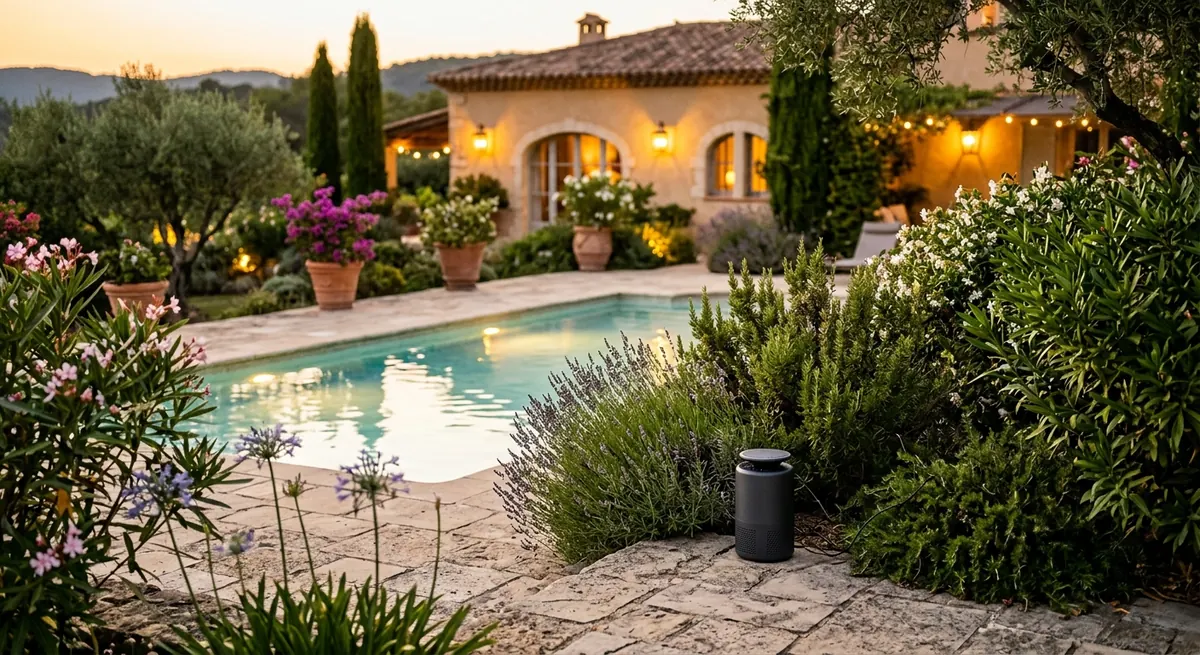
Mechanical traps have improved considerably, and models like the Biogents BG-Mosquitaire or Mosquito Magnet units, which lure mosquitoes using CO2 and octenol attractants, genuinely reduce populations when placed correctly — roughly 10 to 15 meters from the seating area, never right next to it, since the trap itself attracts more mosquitoes to that zone. Expect to pay €300 to €600 for a quality trap plus €40 to €60 per month in consumables during peak season; on a two-hectare property in the Mougins countryside I helped set up three units strategically around the garden perimeter, and the owners reported a noticeable drop in bites within three weeks. As for plug-in electric traps and UV bug zappers, they mostly catch moths and beetles rather than mosquitoes, so I rarely recommend them as a primary solution.
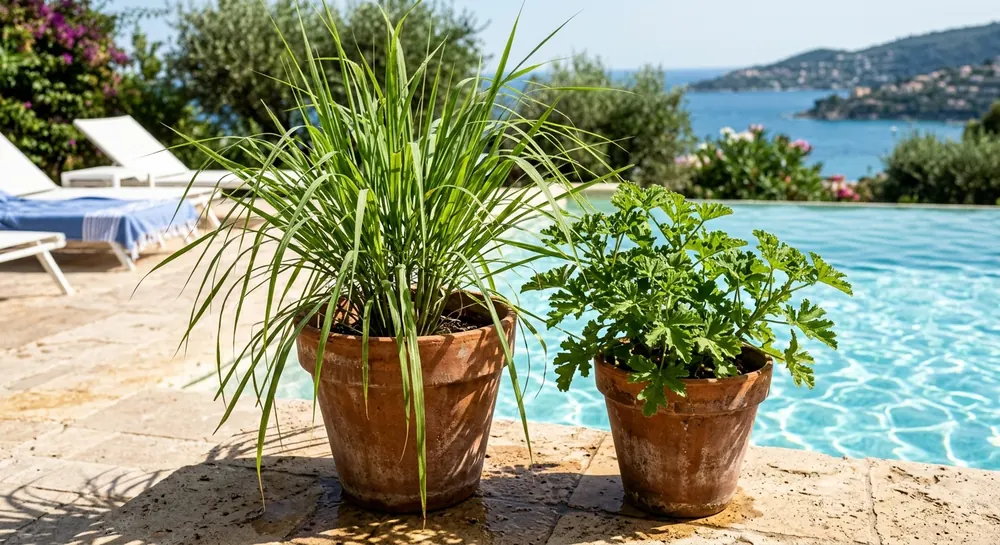
Repellent plants deserve a realistic assessment: citronella geranium, lemongrass, and Tagetes marigolds do produce mosquito-deterring compounds, but only when the leaves are crushed or the plants are densely massed near seating areas — a single potted geranium on the pool deck will not do much on its own. I suggest planting a thick border of lemongrass and lavender along the most-used pathway from the house to the pool, combined with citronella geraniums in large pots near the dining table, which creates a modest but real deterrent effect while also looking beautiful against the Riviera light. Treat these plants as one layer among several rather than a stand-alone fix, and you will get genuine, if modest, results without resorting to constant spraying.
Professional Eco-Treatments and When to Call a Specialist
When a property has a persistent problem despite good habits — common in older villas around Nice's Cimiez district or hillside properties in Peille with multiple water sources — it is worth bringing in a licensed pest control company offering integrated mosquito management rather than blanket insecticide spraying. Reputable firms operating across Alpes-Maritimes now favor an IPM approach: an initial site survey (often free or around €50), targeted BTI larviciding in standing water, and adulticide treatment using pyrethrum-based or other low-toxicity products only where truly necessary, applied to vegetation rather than open air. A seasonal contract with monthly visits from April to October typically costs €600 to €900 for an average villa garden, rising to €1,200-plus for larger estates around Cap Ferrat or Super Cannes with extensive grounds.
For properties bordering the sea or in Monaco's dense residential blocks, always confirm the company holds a Certibiocide certification and uses products authorized under current French biocide regulations — this matters both for your family's health and for compliance with copropriété rules, which increasingly restrict aerosol treatments in shared gardens. I also recommend asking whether the treatment plan includes a misting system installation, which uses a network of fine nozzles around the garden perimeter releasing a measured, low-concentration eco-formulated insecticide at dawn and dusk; a quality misting system installed costs €2,500 to €4,500 upfront plus €400 to €600 annually for refills and servicing, and it remains one of the most effective options for villas hosting frequent outdoor events throughout the Riviera summer.
Frequently asked questions
Start by removing every source of standing water within a 20-meter radius of the pool — plant saucers, gutters, covers that pool rainwater — then treat any water you cannot drain with BTI briquettes every four to six weeks. Combine this with a well-fitted pool cover and good skimmer maintenance, and most villa owners see a dramatic drop in mosquito activity within two to three weeks.
Yes, when applied correctly as part of an integrated plan rather than a one-off spray. BTI larvicides and targeted pyrethrum applications to resting vegetation control populations just as effectively as broad aerosol spraying, without killing bees or harming pets, and they comply with the stricter biocide rules now enforced in many Riviera copropriétés.
A seasonal contract running from April to October with monthly visits typically costs between €600 and €900 for an average villa garden, and €1,200 or more for larger properties around Cap Ferrat or Super Cannes. Adding a permanent misting system raises the upfront cost to €2,500-€4,500 but reduces the need for frequent manual visits.