
Why Riviera Renovations Leave a Different Kind of Mess
Anyone who has walked into a freshly rendered apartment in Vieux Nice two days after the plasterers left knows the smell before they see the dust: a damp, mineral scent that clings to curtains and grout lines. Coastal humidity, often sitting above 65% even in a dry mistral week, keeps fine plaster particles airborne far longer than they would stay suspended in a drier inland town like Grasse. That moisture also means dust does not just settle on surfaces, it bonds slightly with condensation on windows, tile, and especially on the salt-pitted aluminium joinery so common in Cannes and Antibes apartments facing the sea. A dry vacuum pass that would finish the job in Avignon often just smears a thin plaster film across a humid Nice balcony door.
The second complication is proximity to the sea itself. Renovation sites within a few hundred metres of the Promenade des Anglais or the Croisette deal with salt-laden air that reacts with gypsum dust and cement residue, sometimes leaving a faint white bloom on dark tile or natural stone within 48 hours if nobody intervenes. I have seen this happen on a Cap d'Antibes villa job where the owner insisted on waiting a week before scheduling the clean to let the paint cure fully. By the time our team arrived, what should have been a straightforward wipe-down had turned into an acid-wash job on the travertine terrace, adding nearly 600 euros to the final invoice. On the Riviera, timing the clean around both paint-curing needs and humidity levels is not a luxury detail, it is the difference between one clean visit and two.
What a Proper Fin de Chantier Clean Actually Covers
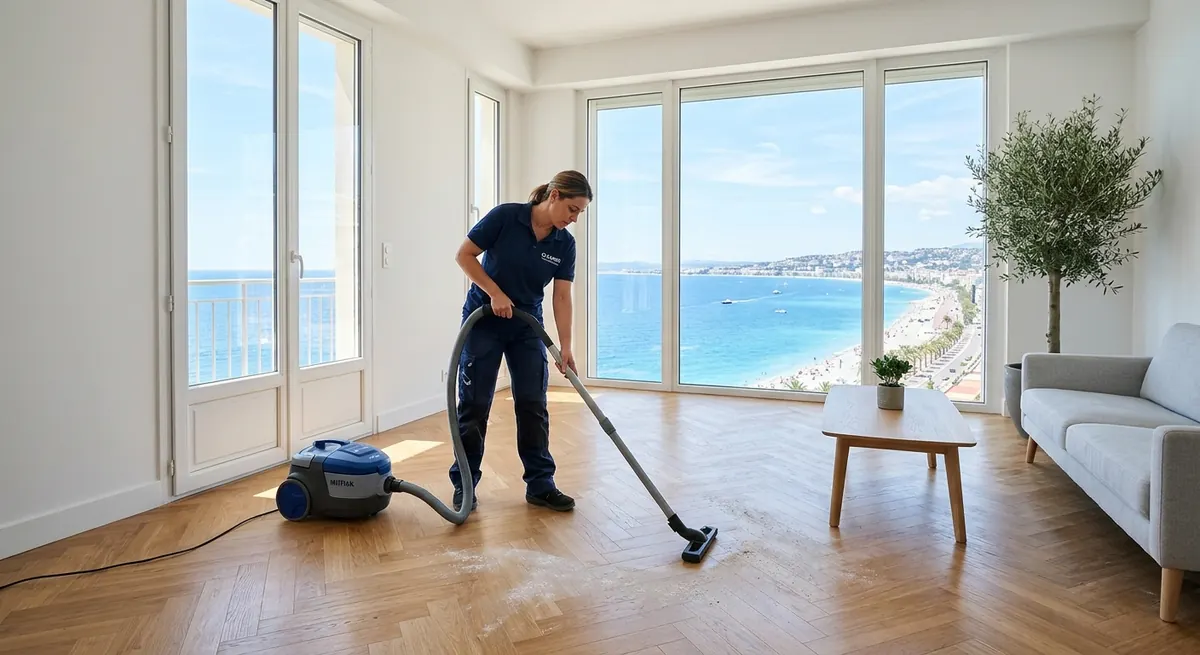
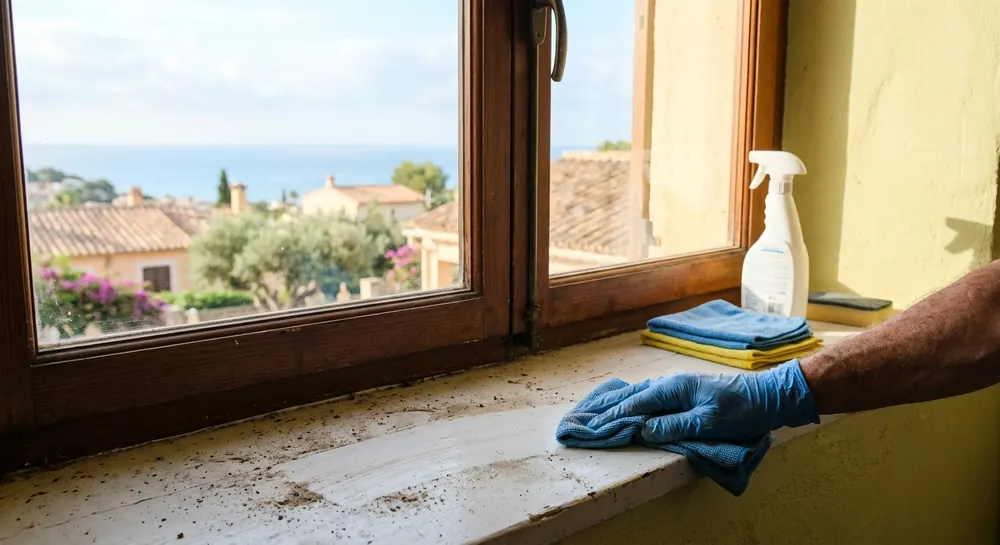
A genuine post-construction clean, what French cleaning companies call nettoyage fin de chantier, is nothing like a weekly housekeeping visit. It starts with a dry dust extraction phase using HEPA-filtered vacuums on every horizontal and vertical surface, including the tops of door frames, light switch recesses, and radiator fins, all places where fine silica and gypsum dust hide after sanding. Only once that first pass is done should anyone bring in water, because wiping dry plaster dust with a wet cloth before extraction just turns it into a grey paste that smears into grout and skirting board joints. The second phase covers windows, frames, and tracks inside and out, which on a sea-view property in Golfe-Juan or Villefranche-sur-Mer can mean working around salt-crusted aluminium runners that need a mild acid cleaner, not just soapy water.
Floors come next, and here the material dictates the method entirely: a reconstituted parquet in a Monaco apartment needs a near-dry microfibre pass with a pH-neutral product, while the tomette terracotta tiles common in older Nice bastides can handle a more aggressive scrub but then need a protective oil reapplied afterwards. Kitchens and bathrooms get a separate line item because grout, silicone joints, and cabinet interiors trap plaster dust in ways a general wipe misses; a thorough team will also degrease extractor hoods and clean inside new cabinetry before the client's first use. A good checklist, and one I hand every client before signing off, includes: all dust extracted from vents and AC units, every window track degreased, skirting boards and door frames wiped, light fixtures and switch plates cleaned, all construction stickers and protective films removed, and a final polish pass on any stone or marble surfaces. Skipping any one of these steps on a coastal property tends to show up as a dull film within a week, not a month.
What It Actually Costs in 2026
Pricing on the French Riviera runs noticeably higher than the national average quoted by cleaning federations, mostly because of parking constraints, lift access fees in older buildings, and the simple fact that labour costs more here than in most of France outside Paris. For a standard one or two-bedroom apartment of 50 to 70 square metres in central Nice, expect to pay between 350 and 550 euros for a full fin de chantier clean, assuming normal access and no major plaster overspray. Larger renovated apartments of 100 to 130 square metres, the kind you find in Cimiez or along Boulevard Gambetta, typically run 600 to 900 euros, and that figure climbs quickly if the building has no lift and equipment has to be carried up four or five flights.
Villas change the calculation substantially. A full villa renovation clean in Cap d'Antibes, Mougins, or the hills above Beaulieu-sur-Mer, covering 200 to 300 square metres plus a terrace and pool surround, generally falls between 1200 and 2200 euros, with the terrace stone treatment alone sometimes adding 300 to 400 euros if salt staining has set in. Monaco sits in its own bracket entirely: logistics restrictions, mandatory insurance documentation for building access, and limited parking push even modest apartment cleans to 700 euros and up, sometimes 30 to 40% above an equivalent Nice job for the same square footage. Most reputable companies quote per square metre as a baseline, somewhere around 6 to 9 euros per square metre for basic post-construction cleaning and 10 to 15 euros per square metre when heavy plaster dust, stone restoration, or extensive window work is involved, then adjust with a fixed call-out fee of 80 to 150 euros for travel and setup specific to Riviera traffic and parking realities.
Getting the Timing Right With Other Trades
The single costliest mistake I see on Riviera renovation sites is booking the cleaning crew too early, usually because a general contractor wants to hand over keys on a deadline and treats the clean as a box to tick rather than a sequenced trade. Paint needs a minimum of 48 to 72 hours to cure enough that wiping does not leave streaks or pull pigment, and in humid coastal conditions that window can stretch to four or five days if the apartment has poor cross-ventilation, which describes a good portion of older buildings in Le Port or Riquier. Floor sealants and stone treatments need their own curing time too, often 24 hours minimum before foot traffic, let alone a scrubbing pass. Bring the cleaners in before these cure times are respected and you risk undoing finishing work that cost far more than the clean itself.
The sequence that works best on every job I have managed: electricians and any final fixture installs finish first, then painters complete their final coat and the space sits untouched for the recommended cure window, then the cleaning crew does their full pass, and only after that do movers bring in furniture. On a typical 80 square metre Nice apartment renovation, this means scheduling the clean three to five days after the last paint coat and ideally the day before, not the day of, furniture delivery. For villa projects where landscaping and pool work overlap with interior finishing, coordinate so that exterior dust from terrace work does not drift back through open doors into a freshly cleaned interior, something that happens more often than contractors like to admit when a mistral picks up mid-week. A five-minute phone call between the general contractor and the cleaning company to confirm paint completion date saves nearly every scheduling conflict I have encountered in fifteen years of these handovers.
DIY, Professional, or Somewhere In Between
Plenty of homeowners ask whether they can handle the fin de chantier clean themselves to save the 400 to 800 euros a professional job typically costs on a mid-sized apartment. For light renovations, a repainted bedroom or a single refreshed bathroom with minimal dust, a determined owner with a HEPA vacuum, microfibre cloths, and a few hours can genuinely do an adequate job, particularly if they follow the dry-extraction-first rule before introducing any water. Where DIY consistently falls short is with whole-apartment or villa-scale renovations involving plastering, flooring, or extensive joinery work, because the volume of fine dust and the number of hidden surfaces, vents, light fittings, the undersides of new kitchen units, simply outpaces what a household vacuum and a weekend can handle properly.
If you do hire a professional, ask three questions before signing: do they use HEPA-filtered extraction equipment rather than standard vacuums, do they include window track and frame cleaning in the base price or as an extra, and do they guarantee a follow-up visit within a week if dust resettles, which happens more often in humid coastal conditions than companies always volunteer upfront. A legitimate Riviera cleaning company, whether based in Nice, Cannes, or Antibes, should be able to quote a clear per-square-metre rate plus itemised extras for stone treatment or heavy stain removal, and should carry liability insurance covering any damage to newly finished surfaces. Get that quote in writing, confirm the paint-cure timing with your contractor before the date is fixed, and you will avoid both the double-cleaning trap and the awkward conversation about who pays when a too-early clean smears a fresh coat of paint.
Frequently asked questions
For a standard 50 to 70 square metre renovated apartment in central Nice, expect 350 to 550 euros for a full fin de chantier clean with no lift access issues. Larger apartments of 100 square metres or more typically run 600 to 900 euros, and buildings without a lift add extra labour cost.
Wait at least 48 to 72 hours after the final paint coat, longer in humid coastal weather, and book the clean three to five days after painting completes and ideally the day before furniture delivery, not the same day.
For light work like a single repainted room, a HEPA vacuum and dry-extraction-first approach can work fine. For whole-apartment or villa renovations with plastering and flooring work, the dust volume and hidden surfaces usually make professional equipment worth the cost.