
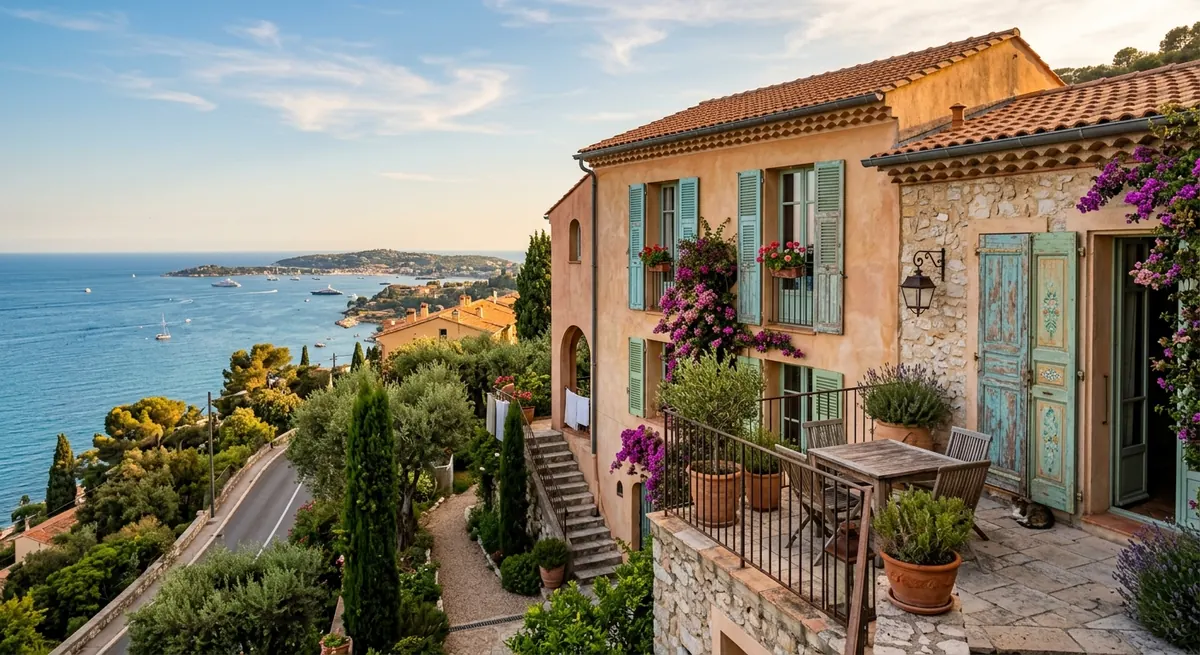
Why Wooden Shutters Still Win on the Riviera
I have replaced or restored close to two hundred pairs of persiennes across villas from Cap Ferrat to the hills above Grasse, and the pattern is always the same: owners arrive convinced that PVC or aluminium is the sensible modern choice, then discover that most communes between Antibes and Menton simply will not let them install it on a street-facing façade. The Bâtiments de France offices covering old Antibes, the Suquet in Cannes, and most of Vieux Nice require timber shutters with specific slat proportions and often a limited palette of colours - the grey-blue called gris Nice, a soft ochre, or the dark green you see repeated street after street in Menton. Beyond the regulatory pressure, wood genuinely performs better in this climate when it is specified correctly, because it flexes with humidity swings between a damp winter mistral and a bone-dry August, something rigid PVC frames struggle to do gracefully over fifteen years.
The real argument for timber, though, is repairability. A stone villa in Mougins or Valbonne might have shutters original to a 1920s build, and a good menuisier can replace a single rotten stile or repin a sagging hinge without touching the rest of the panel. Try that with a sealed PVC unit and you are buying a whole new shutter. I have clients in Antibes still running shutters their grandparents installed in the 1960s, simply because every generation gave them a proper repaint and swapped out ironmongery before it failed. That kind of longevity, plus the simple fact that timber louvres breathe and regulate the microclimate of a room far better than sealed alternatives, is why I keep specifying wood even for clients who arrived dead set against it.
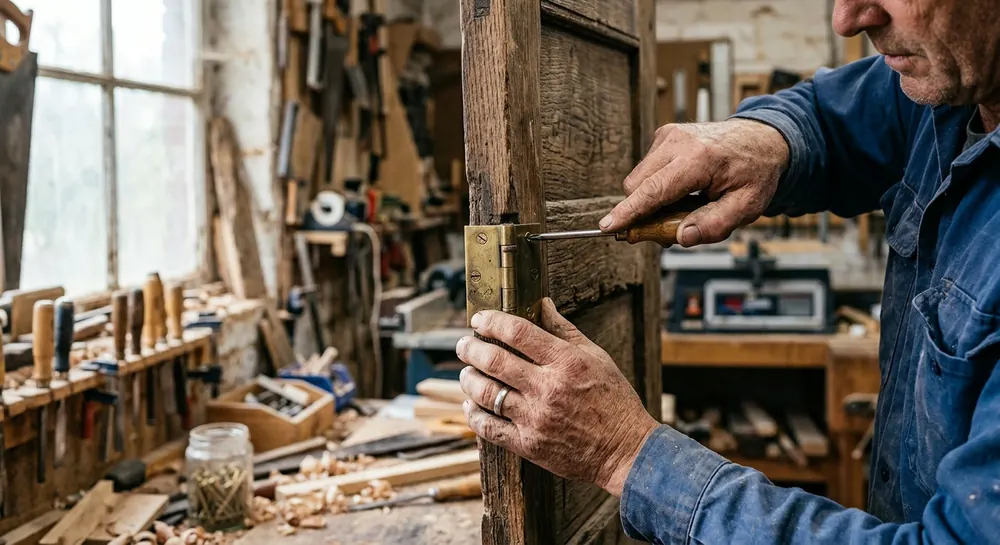
Choosing the Right Timber and Construction
Not all wood behaves the same fifty metres from saltwater. Chestnut, or châtaignier, is my default recommendation for anything within two or three kilometres of the coast - it grows locally in the Var and Alpes-Maritimes hinterland, contains natural tannins that resist rot without heavy chemical treatment, and has been the traditional choice in Provence for exactly this reason. Expect to pay roughly 480 to 650 euros per pair for a standard 120 by 140 centimetre opening in solid chestnut with mortise-and-tenon joinery, delivered unfinished. For clients wanting a slightly cheaper option inland, away from direct salt spray, Douglas fir treated with a class 3 fungicide works acceptably, running closer to 350 to 480 euros per pair, though I would not put untreated softwood anywhere within sight of the Baie des Anges.
For villas right on the water - Cap d'Antibes, the Roquebrune-Cap-Martin coastline, or the lower slopes of Èze - I now push clients toward tropical hardwoods like sipo or iroko despite the premium, because I have watched even good chestnut degrade faster under constant salt-laden spray than it does further inland. These run 750 to 1,100 euros per pair but need almost no structural maintenance for two decades if the paint system is respected. Whatever species you choose, insist on traditional mortise-and-tenon joints rather than glued or doweled construction - glue joints are the first thing to fail when a shutter racks under repeated mistral gusts, and I have re-glued more cheap doweled panels in Villefranche-sur-Mer than I care to count.
Installing Shutters That Survive the Mistral
The mistral is not a gentle breeze - gusts regularly hit 100 to 130 km/h through the Rhône corridor and along the coast from Fréjus to Menton, and a solid closed shutter acts like a sail against a stone lintel that may be two hundred years old and already fatigued. This is exactly why traditional Provençal persiennes use louvred slats rather than solid panels: the gaps bleed off wind pressure instead of transferring the full load to the hinges and anchor points. If a client insists on solid panel shutters for a bedroom facing the sea, I always add a secondary mid-height brace and specify heavier-gauge hardware, because I have seen standard hinges tear clean out of soft limestone during a hard mistral night in Cagnes-sur-Mer.
Hardware is where corners get cut and shutters fail. Standard zinc-plated steel hinges look fine in the showroom and are rusted solid within eighteen months of coastal exposure - I only spec stainless steel or properly hot-dip galvanized pentures now, and brass or inox espagnolette bars rather than the cheap painted steel versions that seize up after two winters. Anchoring matters just as much as the hardware itself: on old stone lintels I use two-part resin anchors rather than simple expansion plugs, because expansion anchors can crack already-stressed stone, something I learned the hard way on a restoration in Biot. Budget an extra 15 to 25 euros per hinge point for marine-grade hardware - it feels like a rounding error next to the cost of re-anchoring a shutter that has ripped out of a wall during a January mistral.
A Realistic Maintenance Calendar for Salt Air
Salt air accelerates everything, and the biggest mistake I see is owners treating Riviera shutters like they would in Lyon or Paris - repainting every eight to ten years and hoping for the best. On south and west-facing elevations from Nice to Menton, where afternoon sun and onshore spray combine, I recommend a light sand-and-recoat every two to three years using a breathable microporous lasure rather than a hard acrylic paint, which traps moisture behind the film and causes the wood to rot from the inside out - a failure mode I have opened up more times than I would like on shutters that looked perfectly fine from the street. A full strip-back to bare wood, with any damaged sections replaced, is realistic every eight to twelve years depending on exposure, and costs 180 to 280 euros per pair for stripping, priming and two topcoats when done by a local artisan rather than a generalist painter.
Hardware needs its own calendar, ideally checked every autumn before the mistral season properly sets in around October through March. I walk every hinge and espagnolette bar on a property, working a lanolin-based marine lubricant into moving parts and checking anchor points for movement in the stone - a five-minute job per shutter that catches problems while they are still a tightening job, not a rebuild. Clients who skip this step tend to call me in February after a shutter has torn loose in the night, and by then you are looking at emergency callout rates plus urgent carpentry rather than a routine 40 to 60 euro service visit.
Budgeting the Whole Project
For a full villa re-fit, the numbers add up quickly but scale predictably. A typical Riviera villa with twelve to sixteen window openings, moving from tired 1980s aluminium roller shutters back to traditional chestnut persiennes, generally lands between 9,000 and 16,000 euros installed, including removal of the old units, resin anchoring into stone, and two coats of marine-grade lasure in an ABF-approved colour. Restoration of existing original shutters - stripping, splicing in new timber where sills or stiles have rotted, and rehanging with upgraded stainless hardware - typically runs 40 to 60 percent of full replacement cost and preserves details modern reproductions rarely match, like hand-cut louvre profiles specific to a region.
If your property sits within a secteur sauvegardé in Vieux Nice, Antibes, or the Suquet in Cannes, build in an extra four to eight weeks for ABF approval before any work starts, and expect the paint colour and slat width to be non-negotiable rather than a matter of taste. Get at least two quotes from menuisiers who specifically list persiennes provençales in their portfolio rather than generalist joiners - the joinery techniques and hardware knowledge really are a distinct trade specialty here, and I have seen too many generalist quotes that look 20 percent cheaper on paper but use standard hardware that will need replacing within three winters.
Frequently asked questions
With chestnut or tropical hardwood construction, marine-grade hardware, and a repaint cycle of every two to three years on exposed elevations, expect 25 to 40 years of solid service before major structural replacement is needed, though hinges and espagnolette bars typically need upgrading sooner if the original hardware was not coastal-rated.
In most secteurs sauvegardés and zones protected by the Architectes des Bâtiments de France, including Vieux Nice, old Antibes, and the Suquet in Cannes, only timber shutters meeting specific slat and colour requirements are permitted on street-facing façades; check with the local urbanisme office before ordering anything.
Restoration generally costs 40 to 60 percent of full replacement and preserves original joinery details, making it worthwhile if the timber core is sound; full replacement makes more financial sense once more than a third of the wood is rotted or the frame has racked out of square from repeated mistral stress.