
Why Pre-War Nice Apartments Are a Different Animal
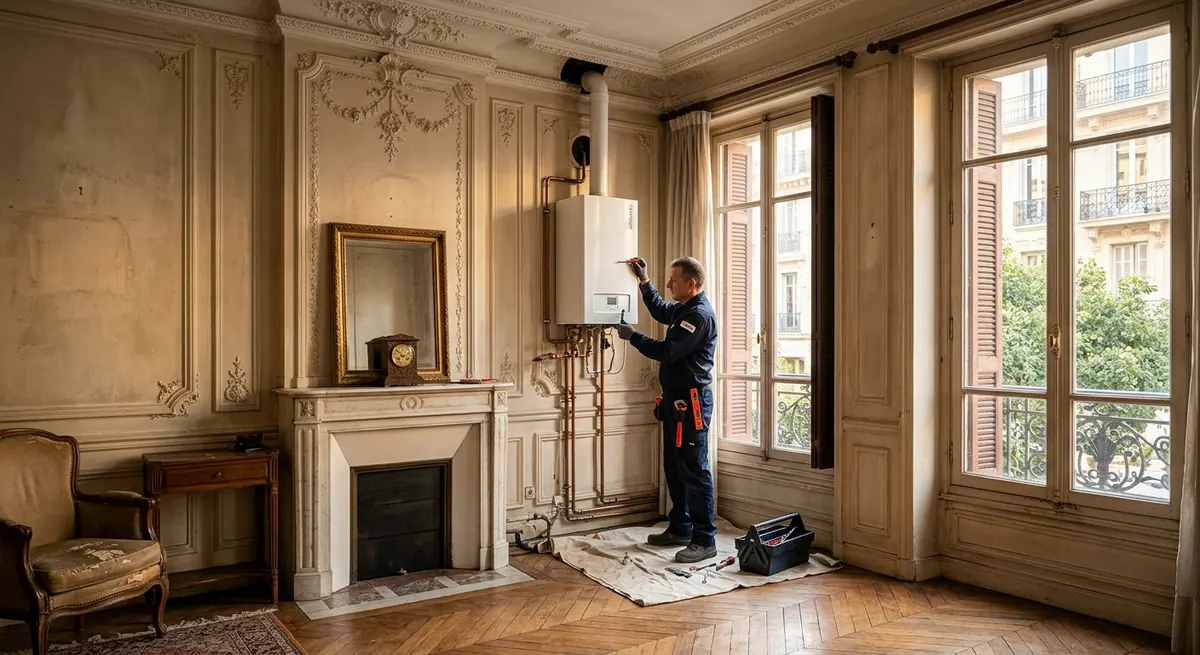
I have walked into more chaufferies in Vieux Nice, Riquier and the Carré d'Or than I can count, and the pattern repeats itself with remarkable consistency: a 1985-era chaudière gaz standard, often atmospheric rather than ventouse, tucked into a kitchen cupboard barely 40cm deep, venting into a shared masonry flue shared with four or five neighbours above and below. These conduits de fumée collectifs were never designed for the condensing boilers we fit today, and that single fact drives most of the technical headaches on these jobs. The flue diameter is frequently too wide for a modern appliance's lower flue-gas volume, which causes condensation to pool inside the shaft and slowly degrade decades-old brickwork - something I have seen cause real damage in buildings on Rue de la Préfecture and around Place Garibaldi.
Add to that the sheer age of the gas supply itself. Many buildings built before 1948 still run low-pressure gas risers that were never upsized when central heating replaced coal stoves, and some apartments in Cimiez or on Boulevard Gambetta still have meters and regulators that predate any recent norm. Before even discussing which boiler to buy, a competent installer needs to check the gas pressure at the point of use, inspect the flue with a camera if possible, and confirm whether the building's chauffage is individuel or collectif - because in a surprising number of Nice copropriétés built in the 1930s and 1960s, what looks like an individual boiler is actually tied into a shared distribution loop that the syndic, not the apartment owner, is responsible for maintaining.
What France's Current Heating Rules Actually Require in 2026
The regulatory picture that owners in Nice are dealing with right now has three layers, and conflating them is the single biggest source of confusion I hear on site visits. First, there is the DPE (diagnostic de performance énergétique): apartments rated F or G are now locked out of the rental market, and a tired 25-year-old boiler running at 78% efficiency is very often what tips a decent 1930s stone-built flat into that F category. Second, pure fioul boiler installation has been banned nationally for years now, which pushes anyone replacing an old oil system toward gas, hybrid, or electric heat pump solutions - relevant for a handful of older Nice buildings still running on heating oil tanks in the cave. Third, and most practically relevant for gas: any new or replacement boiler installed today must be a condensing model (chaudière à condensation), full stop - the old standard chaudières are simply no longer sold or certified for new installation in France.
On the financing side, MaPrimeRénov' has tightened its criteria since gas boilers stopped qualifying for the main subsidy tiers, which genuinely surprises a lot of Nice owners who assume a like-for-like swap will be subsidised the way it was a few years back. What is still funded generously is anything that reduces fossil fuel dependence - hybrid systems pairing a small gas condensing unit with an air-source heat pump, or a full PAC air-eau conversion, can pull in MaPrimeRénov' amounts of 3,000€ to 5,000€ depending on household income bracket, plus CEE (certificats d'économies d'énergie) primes from energy suppliers that typically add another 500€ to 1,200€. A straight condensing gas boiler replacement, by contrast, now mostly only qualifies for a reduced CEE prime, often under 500€, which changes the economics of the decision considerably once you run the numbers over ten years.
Choosing the Right Replacement: Gas, Hybrid, or Heat Pump
For a straightforward one-for-one swap - new condensing gas boiler, same flue route, same radiators - realistic pricing in Nice runs 4,200€ to 7,500€ installed, with the variation driven almost entirely by flue adaptation work. If the existing conduit can be relined with a flexible stainless steel liner (tubage), you are at the lower end; if the syndic requires a shared flue survey and partial reconstruction because the building's conduit is genuinely unfit for condensing appliances, costs climb fast and you may be looking at 9,000€+ once masonry and scaffolding access from a Vieux Nice courtyard get involved. This remains the path of least resistance for owners who want heating restored within a week and are not chasing subsidy money, and it is still the right call for a studio in Riquier rented at modest rates where payback horizons matter more than long-term decarbonisation.
Heat pumps are where things get genuinely interesting, and genuinely constrained, in historic Nice buildings. A PAC air-eau needs an outdoor unit, and in a Carré d'Or apartment on the third floor with no balcony and a protected Haussmannian facade, there is often nowhere compliant to put one - the Architecte des Bâtiments de France and most syndics will refuse anything visible from the street, and noise regulations (the arrêté bruit de voisinage) rule out units mounted on party walls shared with a neighbour's bedroom. Where it does work - ground floor flats with a private courtyard, or top-floor apartments with roof terrace access near Cimiez or on the Riviera side of Fabron - a full PAC air-eau conversion typically costs 11,000€ to 16,000€ once you include the hydraulic work to adapt radiators (heat pumps run cooler water than old gas systems, so undersized radiators sometimes need replacing). Hybrid systems split the difference nicely: a compact condensing boiler for peak cold snaps backed by a smaller heat pump for everyday running, priced around 13,000€ to 17,000€ installed, and in my experience the sweet spot for owners in buildings where full heat pump conversion is architecturally impossible but who still want to cut gas consumption by 60-70%.
Getting Past the Copropriété and Building Constraints
Nothing derails a boiler replacement faster than discovering, mid-project, that the syndic needs to approve the work and the next assemblée générale is four months away. Any intervention touching a shared flue, any new flue penetration through an external wall, and certainly any outdoor heat pump unit visible from a street or courtyard in a building under Bâtiments de France oversight - which covers most of Vieux Nice, parts of the Port, and swathes of the Carré d'Or - requires formal approval before work starts. I always tell clients to request the règlement de copropriété and recent AG minutes early, because some buildings have already set a collective policy (sometimes banning individual ventouse flues on certain facades for aesthetic reasons) that will shape your options before you have even chosen an installer.
Where urgency is genuine - a boiler that has died in January with a tenant in the flat - most syndics will fast-track an urgent repair-replacement under the same model and same flue route without a full vote, since that counts as maintaining existing installations rather than modifying the building. The moment you want to change flue type, add an external unit, or shift from collective to individual heating, you are into travaux affectant les parties communes territory, which needs a vote and realistically adds six to ten weeks to any project timeline. My practical advice: get the syndic's written position in hand before signing anything with an installer, and build that administrative lead time into your planning rather than discovering it after a quote has already expired.
Budgeting, Financing and Choosing a Reliable Installer
Total project cost is rarely just the boiler. Once you add flue work, hydraulic adjustments, the mandatory thermostat and regulation upgrade, and the attestation RGE documentation needed for any subsidy claim, a mid-range gas condensing replacement in a Nice apartment averages 6,000€ to 8,500€ all-in, while a hybrid or full heat pump conversion sits more realistically at 14,000€ to 19,000€ before subsidies are deducted. Subsidies can meaningfully change this picture - between MaPrimeRénov', CEE primes, and in some cases a Métropole Nice Côte d'Azur local aid for energy renovation, I have seen hybrid system net costs come down by 4,500€ to 6,000€ for middle-income households, which narrows the gap with a basic gas swap considerably once you factor in ten years of fuel savings.
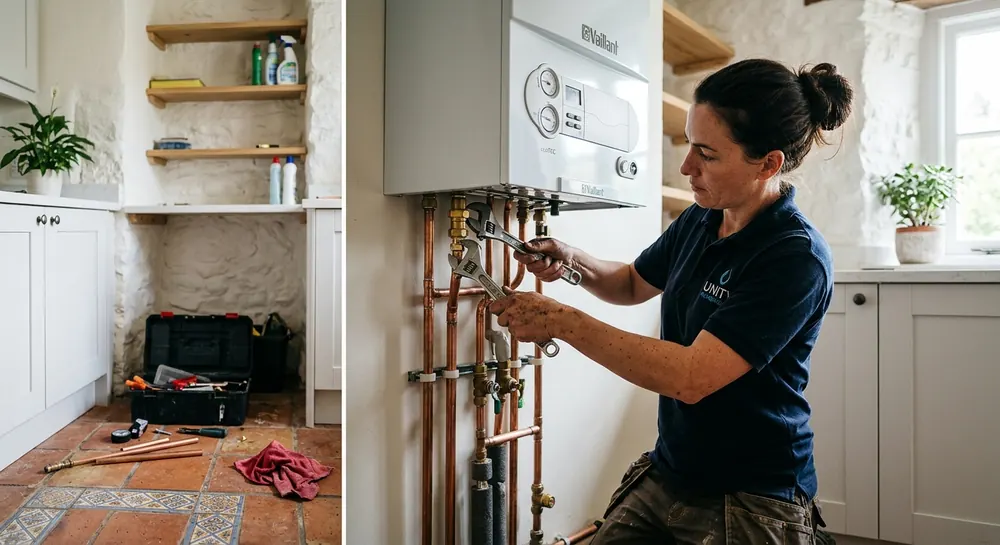
On choosing an installer, insist on RGE (Reconnu Garant de l'Environnement) certification as a non-negotiable - without it, you lose access to every subsidy mentioned above, no exceptions. Get at least two quotes that itemise flue work separately from the appliance itself, because this is where I see the biggest price discrepancies and occasionally outright padding on jobs in older buildings where a contractor assumes the client will not question flue costs. Ask specifically whether the installer has worked in protected Nice buildings before and can produce references from similar copropriétés - someone who has only ever fitted boilers in newer Cagnes-sur-Mer or Saint-Laurent-du-Var developments will often underestimate both the admin lead time and the physical access challenges of a sixth-floor Vieux Nice walk-up with no lift.
Frequently asked questions
Gas remains legal for replacement installations, but only condensing models are sold and certified now - plain standard boilers are off the market. Full heat pump or hybrid conversion is encouraged through subsidies but not mandatory for most apartments.
A like-for-like condensing gas boiler swap typically runs 6,000€ to 8,500€ once flue adaptation and regulation work are included, while a hybrid or full heat pump conversion usually falls between 14,000€ and 19,000€ before subsidies.
Urgent like-for-like replacements using the existing flue route usually do not require a full vote, but any change to flue type, external units, or shared systems needs formal copropriété approval, which can add six to ten weeks to your timeline.