
Reading Your Floor Before You Touch It
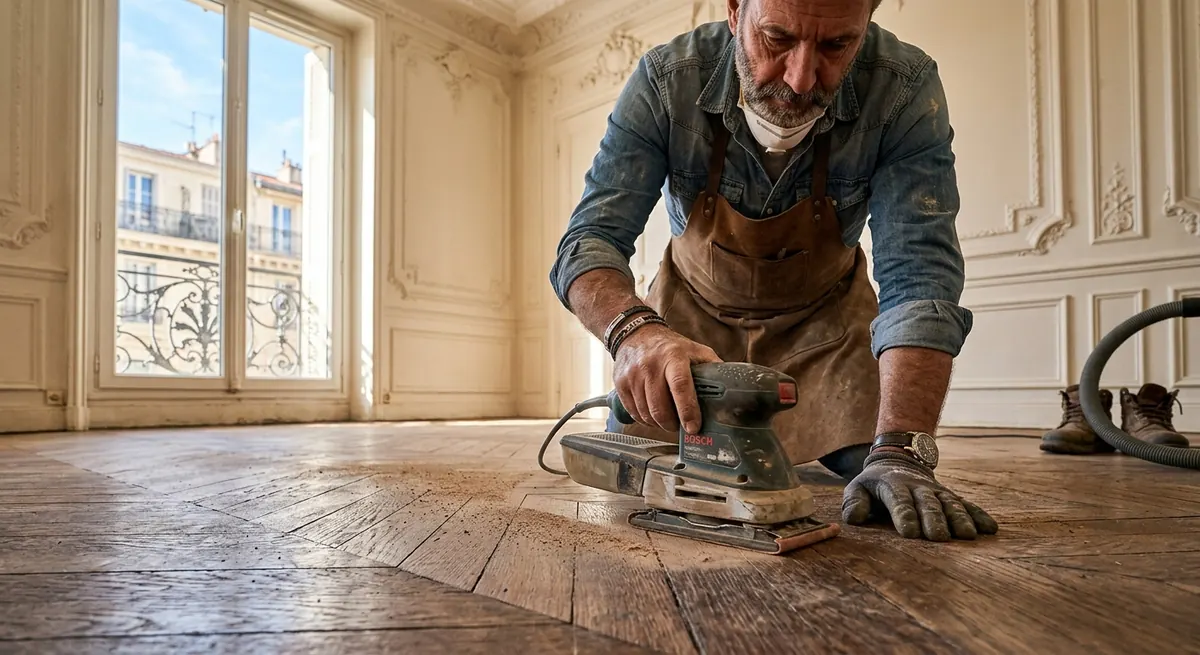
Walk into almost any building on rue de France, avenue Jean Médecin or the streets around Cimiez built between 1880 and 1910, and under the carpet or the linoleum somebody's grandmother installed in the 1970s, there is a good chance you will find point de Hongrie oak, a herringbone chevron pattern, or a Versailles-style panel parquet laid directly onto joists. These floors were a genuine status marker in Nice's Belle Époque building boom, when the city was filling up with grand hotels and rental apartments for wintering aristocrats from Russia, England and Central Europe. Before you plan any restoration, spend an afternoon on your knees with a flashlight identifying the pattern, the wood species (usually oak, sometimes chestnut or pine for secondary rooms), and how the boards are fixed — nailed, or held by tongue and groove without visible fixings, which changes everything about how much sanding the wood can tolerate.
The single most important number in this whole project is the thickness of usable wood left above the tongue-and-groove joint or the nail heads. On original 19th-century parquet this is often only 4 to 6 mm, because the floor may already have been sanded two or three times over 140 years. A parqueteur worth hiring will check this with a moisture meter and a small test cut in an inconspicuous corner, typically behind a door or under a radiator, before quoting anything. If you skip this step and send a rented drum sander over boards with only 2 mm of wear layer left, you will expose nail heads, create dips, and possibly destroy a floor that cannot be replaced in kind. I have seen this happen in a lovely three-room apartment near Place Masséna, where an impatient owner cost himself close to 9,000 euros in specialist repair after a weekend DIY attempt with a hired machine from a Nice tool-rental shop.
What Heritage Rules Actually Require in Nice
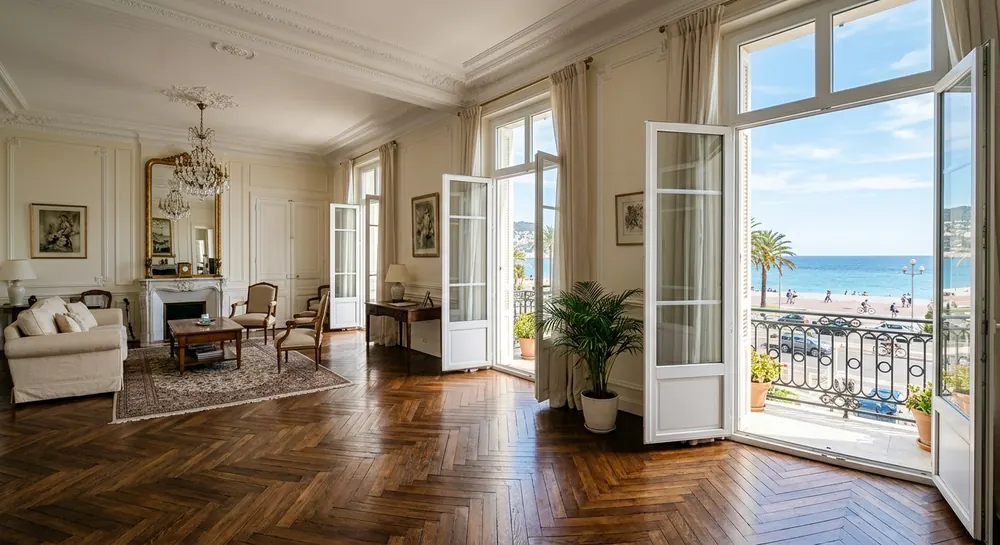
Nice's Belle Époque quarters — Carré d'Or, the streets around the Promenade des Anglais, parts of Cimiez and the old town — sit inside zones covered by the Plan Local d'Urbanisme's protected heritage sections, and some buildings are individually listed or sit within a secteur patrimonial remarquable. This mostly governs the exterior: facades, balconies, ironwork, window proportions. Interior flooring is rarely subject to a formal ABF (Architecte des Bâtiments de France) authorization unless the building itself is classified monument historique or the apartment is part of a copropriété whose règlement specifically protects interior decorative elements, which does happen in a handful of grand immeubles along the Promenade and in Cannes' equivalent buildings near La Croisette. Always check your copropriété's règlement and ask the syndic in writing before starting; some older documents list original parquet, moldings and marble mantels as protected common-interest features even in privately owned lots.
Where things get genuinely regulatory is if you plan to change the floor's appearance in a way visible from outside, replace it entirely, or if your building has any classification tied to a subsidized restoration program — this is more common in Vieux Nice than in the newer Belle Époque streets. In Monaco's Le Rocher district and parts of old Antibes, municipal heritage services are notably stricter and will sometimes require you to use a specific finish type or prohibit resin-based vitrification altogether in listed interiors. My practical advice: even when no formal permit is needed, take dated photographs of the existing floor before starting work and keep your artisan's devis and factures. If a future sale or an insurance claim ever raises a heritage question, this paper trail is what protects you, and notaires in Nice increasingly ask for it during due diligence on older apartments.
Sanding and Structural Repair, Done Properly
A competent restoration on an 80 m² Belle Époque apartment in Nice — say three main rooms plus a corridor with original parquet — typically runs 3,500 to 7,000 euros for sanding, minor repair and a first coat of finish, excluding major structural work. Expect the artisan to work through at least three grit stages (roughly 40, then 60, then 100 grit) using a dustless or low-dust orbital and edge sander, since old apartment buildings in Nice rarely have the ventilation or floor protection to handle a full-dust drum sander without covering every neighbor's stairwell in fine oak dust. Add 15 to 25 percent to the budget if boards need de-nailing and re-securing, which is common where old cut nails have worked loose over a century of settling, particularly in buildings along the seafront that have experienced more humidity cycling.
Repairing missing or rotten sections is where real expertise (and real money) comes in. Matching 140-year-old oak means either sourcing reclaimed boards of a similar age and patina from specialist reclaimers around Grasse or Vallauris, or having new oak cut and artificially aged through fuming and staining to blend with the surrounding boards — a skilled ébéniste-parqueteur charges roughly 80 to 150 euros per linear meter for this kind of bespoke patch work, depending on pattern complexity. Herringbone and Versailles panels are considerably more time-consuming to patch than simple straight-laid boards because the replacement pieces must match both grain direction and the geometry of the surrounding pattern; budget extra time here rather than extra rush, since a botched patch is far more visible on point de Hongrie than on a plain strip floor.
Choosing a Finish That Respects the Original Character
This is where many restorations go wrong aesthetically even when the sanding itself is flawless. Modern high-gloss polyurethane vitrification, so popular in newly renovated Nice apartments near the tramway line, looks jarringly plastic on a 19th-century floor and tends to be discouraged (sometimes explicitly banned) in classified or heritage-sensitive buildings around Monaco's Le Rocher and parts of old Antibes. The historically appropriate approach is a penetrating hardwax oil finish, which soaks into the wood rather than sitting on top of it as a film; it produces the warm, slightly matte sheen you see in period photographs and in well-preserved apartments along the upper floors of buildings on boulevard Victor Hugo. Oil finishes cost more in maintenance — expect to re-oil high-traffic areas every 2 to 4 years at roughly 8 to 15 euros per m² in product and labor — but they age gracefully and can be spot-repaired without resanding the whole room, unlike varnish.
If your household genuinely needs a tougher, lower-maintenance surface (young children, dogs, a rental unit turned over between tenants), a satin or matte-finish water-based varnish is an acceptable compromise that still reads as respectful of the period, provided you avoid anything marketed as high-gloss or ultra-durable garage-style coatings. Whichever finish you choose, always test it on an offcut or an inconspicuous corner first and view it in the room's actual light — south-facing Belle Époque apartments in Nice with tall shuttered windows can make an oil finish look noticeably warmer or darker than the same product tested under a hardware store's fluorescent lighting. Full refinishing including two coats typically adds 12 to 20 euros per m² to your budget beyond the sanding cost, and I always recommend a 48 to 72-hour cure period before moving furniture back, longer in humid coastal weather typical of Nice in autumn and early winter.
Budget, Timeline and Finding the Right Artisan
For a realistic full-project budget on a mid-sized Belle Époque apartment in central Nice, plan for 4,500 to 9,000 euros covering diagnostic visit (150 to 300 euros), sanding, patch repairs on roughly 5 to 10 percent of the floor area, and a two-coat finish. Larger apartments with elaborate Versailles-panel parquet in prestige buildings near the Promenade des Anglais, or comparable properties in Cannes and Monaco, can run considerably higher — I have seen quotes above 15,000 euros for 140 m² floors requiring extensive patching and hand-fitted panel repair. Get at least three devis, and be wary of any quote significantly below the others; corners get cut on grit progression and drying time between coats, and that shows up as swirl marks or premature finish failure within a year.
Look specifically for artisans who describe themselves as parqueteur-poseur or ébéniste with restoration experience, not just a general flooring installer used to laying new engineered boards — ask to see photos of comparable period work, ideally in Nice's own building stock rather than generic portfolio shots. Confirm they carry assurance décennale, France's mandatory ten-year insurance for construction work, since this matters if a repair fails later. Timeline-wise, a straightforward three-room restoration takes 5 to 8 working days including drying time; complex multi-room projects with extensive patching can stretch to three weeks. Finally, always notify your downstairs neighbors before sanding starts — noise and dust travel through old Belle Époque party walls and floor structures more than most owners expect, and a polite heads-up avoids friction in buildings where relationships with the syndic and fellow copropriétaires matter for future projects too.
Frequently asked questions
For a typical 80 m² Belle Époque apartment, expect 4,500 to 9,000 euros for diagnostic, sanding, minor patch repairs and a two-coat finish. Complex Versailles-panel floors or larger prestige apartments can exceed 15,000 euros.
Interior flooring is usually not subject to ABF authorization unless the building is a classified monument historique or your copropriété règlement specifically protects interior decorative elements. Always check with your syndic in writing before starting work.
It is risky. Original boards often have only 4 to 6 mm of usable wood left above the tongue and groove, and an aggressive rented drum sander can expose nail heads or ruin the floor permanently. A professional diagnostic before sanding, costing 150 to 300 euros, is money well spent.