
Why an Empty Villa on the Riviera Is a Different Risk Than an Empty Flat in Lyon
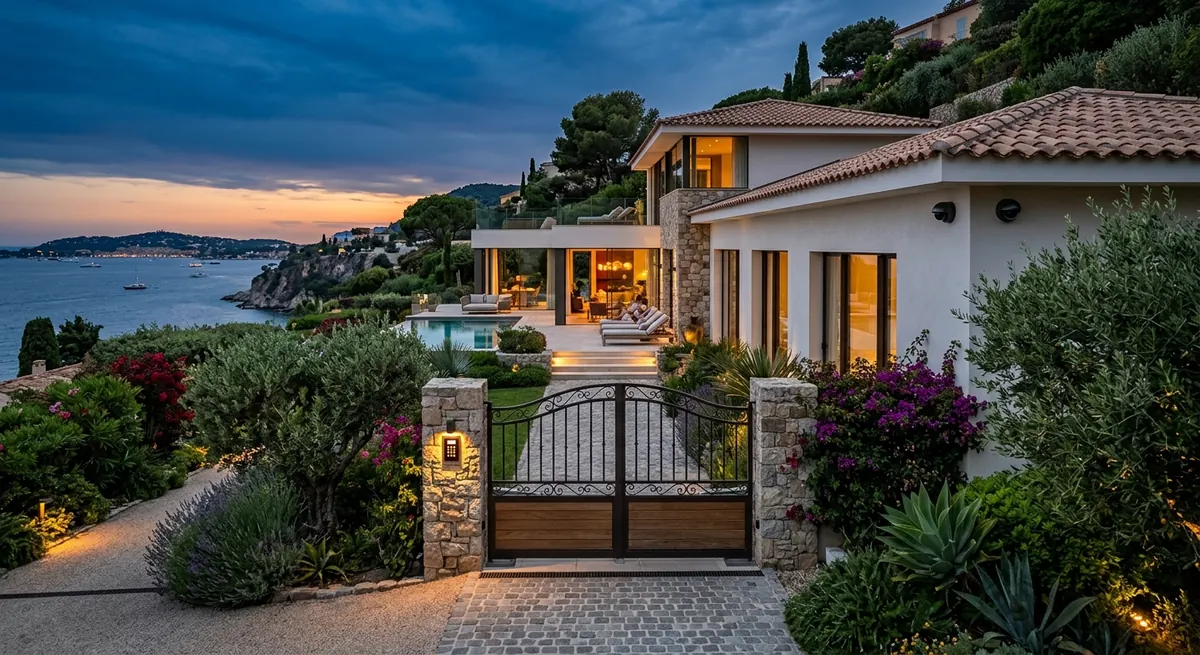
I have walked through more break-in aftermaths than I would like to admit, and the pattern on this coast is remarkably consistent. A villa in Mougins or above Cannes sits dark from October through March, the pool is covered, the shutters are down, and from the road it reads as exactly what it is: unoccupied for six months. Local gendarmerie in the Alpes-Maritimes consistently flag the November to February window as the spike period for rural and hillside burglaries, precisely because the usual deterrents — a car in the driveway, lights at dusk, a dog barking — simply are not there. Add in the fact that many of these properties sit on quiet private roads behind gates, often without close neighbours, and you have a setting where an intruder can work undisturbed for twenty or thirty minutes, which is more than enough time to strip a villa of jewellery, electronics and art.
The second factor owners underestimate is how visible wealth actually is on this stretch of coast. Property listings, drone photos from past sales, even geotagged Instagram posts from previous summer rentals give a would-be thief a clearer floor plan than most police reports admit. I have had clients in Antibes and Saint-Jean-Cap-Ferrat discover, after the fact, that their villa's layout was essentially public knowledge through a real estate portal that never took the listing down. None of this means panic is warranted — it means the security plan has to assume the house will be researched and scouted before anyone sets foot on the property, not treated as a random opportunistic target.
Alarms: Picking a Base System That Actually Gets Monitored
Start with the distinction that matters most and gets glossed over by installers eager to sell hardware: an alarm that only makes noise is not the same as an alarm connected to a télésurveillance station. A decent wireless kit from a brand like Verisure, Securitas or a French operator such as Protection 24 runs roughly 800 to 2,500 euros installed for a mid-sized villa of 200 to 350 square metres, covering perimeter door and window contacts, a couple of motion detectors, and a central panel with cellular backup. That cellular backup is not optional on the Riviera — plenty of villas up the hillsides above Nice or Grasse have patchy landline and even patchy fibre, so if your alarm's only link to the monitoring station is the house Wi-Fi, a simple cut cable or power outage defeats the whole system before it even triggers.
Monitoring itself is the recurring cost owners forget to budget, and it typically runs 25 to 60 euros a month depending on response level — some contracts dispatch an agent to the property within 20 to 30 minutes of a confirmed alarm, others simply call you and the police. For a villa worth several million euros sitting empty for five months, I tell clients to pay for the agent dispatch tier every time; the marginal 15 to 20 euros a month is nothing next to the value of having someone physically on-site before intruders have finished loading a van. One more practical point: French insurers increasingly require NF&A2P-certified alarm equipment for full theft coverage on high-value contents, so check your police d'assurance habitation before you sign an installer contract, not after a claim gets reduced because the hardware did not meet the certification the policy specified.
Cameras: Coverage, Resolution and the French Privacy Rules Nobody Reads
Camera systems have become genuinely good value over the past couple of years, and a competent setup for a villa with a gated entrance, pool terrace and two or three building faces typically costs 1,500 to 6,000 euros depending on camera count, resolution and whether you want on-site NVR storage or cloud storage with a subscription. I generally push clients toward a hybrid: four to eight PoE cameras at the perimeter and entry points recording locally to a hardened NVR, plus two or three cloud-connected units (Eufy, Ajax, or a professional-grade option like Hikvision through a licensed installer) covering the most likely entry points, so that even if someone disables the local recorder, footage of the approach already left the property. Infrared and low-light performance matters more here than most owners think, because villa grounds along this coast are often genuinely dark at night — no street lighting, dense Mediterranean vegetation, long driveways — so a camera that looks sharp on a showroom demo can produce useless grey mush in real conditions.
On the legal side, France is stricter than many buyers expect: cameras cannot point at a public road or a neighbour's private space, you are required to post a visible notice if cameras cover any area accessible to visitors (the gate, the entrance hall), and footage retention is capped at roughly 30 days under CNIL guidance unless there is an active investigation. I have seen a dispute in Cap d'Antibes escalate badly because a camera angle caught a chunk of the neighbouring property's terrace — a formal complaint followed, and the owner had to re-angle three units and resubmit a declaration. A good local installer who has done forty villas in the Var and Alpes-Maritimes will know these constraints cold; one who is purely selling hardware from a national chain may not, so ask specifically how they handle angle compliance before you commit.
Remote Monitoring and the Human Layer: Keyholders, Gardiennage and Caretakers
Technology alone does not protect an empty villa — it tells you something is wrong, but someone still has to physically respond, and that response time is everything. Most serious owners on the Riviera pair their alarm and camera system with a local keyholding or gardiennage service, typically 150 to 400 euros a month depending on visit frequency, that commits to a physical check within a set window after any alarm trigger and does a scheduled walk-through once or twice a week regardless. Companies like Côte d'Azur-based concierge and property management outfits (several operate specifically between Cannes, Mougins and Monaco) bundle this with pool and garden upkeep, which has the added benefit of keeping the property looking lived-in — cut grass, a pool without algae, shutters opened on a rotation — all genuine deterrents in their own right, not just maintenance line items.
The remote monitoring app layer has matured enough now that owners in London, Geneva or New York genuinely can watch their Villefranche-sur-Mer or Beaulieu property in near real time, but I always warn clients against treating the app as the whole solution. Push notifications get muted, time zones create gaps, and a motion alert at 3am local time lands at an hour nobody is checking their phone. The systems that actually work combine the app (for your own peace of mind and to verify footage quickly) with a contracted monitoring station and a human keyholder as the enforced backstop — so even if you are asleep in another time zone, someone with a key and local knowledge is already rolling by the time you wake up and open the notification.
Building the Full Setup Without Overspending
Pulling this together for a typical Riviera villa, realistic all-in annual costs land somewhere between 2,000 and 5,000 euros for a mid-sized property — covering alarm monitoring, a modest camera package, and a keyholding contract at the lower end of visit frequency — rising toward 8,000 to 12,000 euros a year for a large estate in Cap Ferrat or above Monaco with extensive grounds, multiple outbuildings and a higher-tier rapid-response contract. That is not a trivial sum, but set against even a modest burglary loss — insurers in the region routinely process claims well into six figures for art, watches and electronics taken from unoccupied villas — the security budget is cheap insurance, and most home insurance policies will also shave a meaningful percentage off premiums once a certified alarm and monitored system are in place, which partially offsets the cost.
My practical sequencing advice for owners setting this up for the first time: get the alarm and its NF&A2P certification sorted first, since that unlocks the insurance discount and satisfies policy requirements regardless of what else you add. Layer cameras in second, prioritising the main gate, any ground-floor sliding doors and the pool house, since those are the actual entry points thieves use, not the dramatic clifftop shots installers love to show off. Add the keyholding contract last if budget is tight for year one, but do not skip it entirely — an alarm with nobody to physically respond is a notification system, not a security system, and on a coastline where your nearest trusted contact might be a three-hour flight away, that physical response layer is the piece that actually stops a burglary in progress rather than just documenting it afterward.
Frequently asked questions
Expect 800 to 2,500 euros for installation of a mid-range wireless system with cellular backup, plus a monthly monitoring fee of 25 to 60 euros depending on whether the contract includes agent dispatch to the property or just a phone alert to you and the police.
If any camera covers an area accessible to visitors, such as a gate or entrance hall, French law requires a visible notice informing people they are being filmed, and footage retention is generally capped around 30 days under CNIL rules unless tied to an active investigation. Cameras also cannot capture public roads or neighbouring private areas without consent.
Yes for most absentee owners, because an alarm only detects and a camera only records — neither physically stops an intruder or secures the property afterward. A local keyholder who can respond within 20 to 30 minutes, typically for 150 to 400 euros a month, is the layer that turns an alert into an actual intervention.